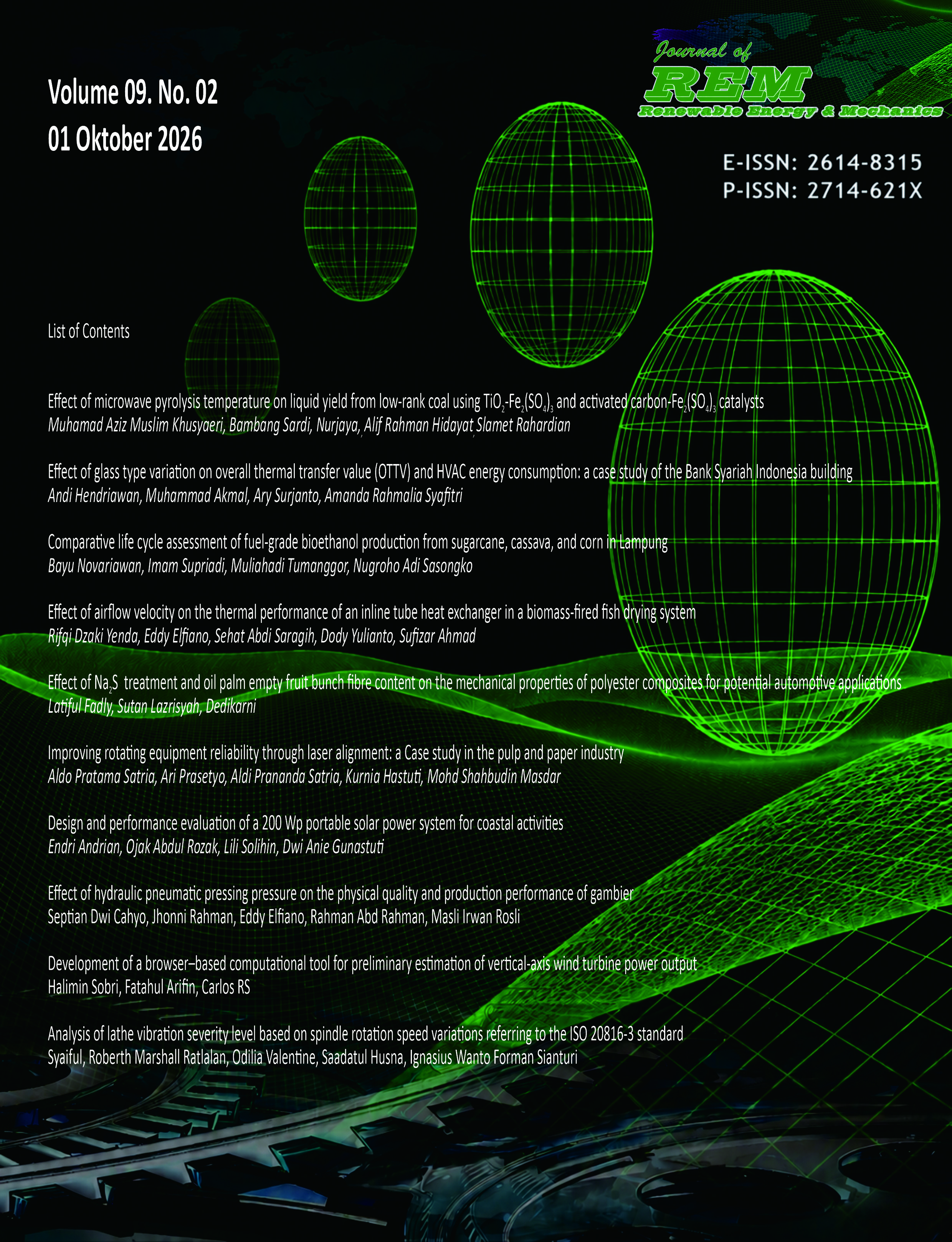
Improving rotating equipment reliability through laser alignment: a Case study in the pulp and paper industry
DOI:
https://doi.org/10.25299/rem.2026.28911Keywords:
Alignment, equipment reliability, MTBF, vibration, condition monitoringAbstract
Reliability of rotating equipment is crucial to maintaining production continuity in the pulp and paper industry. Equipment 432P082 in the Fiberline 2 area of PT. XYZ has a low Mean Time Between Failures (MTBF) of about one month, which can disrupt operations and increase maintenance costs. This study evaluates alignment methods to improve equipment reliability and extend MTBF. The research methods include field observation, collecting historical failure data, vibration measurements, laser alignment, and MTBF analysis before and after repair. The results show that a more precise alignment method can reduce misalignment and vibration levels to meet ISO 10816 and ANSI/ASA S2.75-2017 standards. The MTBF value increased from approximately one month to more than ten months without equipment failure during the observation period. In addition, component failures became less frequent, and maintenance became more effective. Prior to the repair, the company incurred maintenance costs of Rp74,210,400 per month due to the high frequency of failures. Therefore, implementing proper alignment methods has been proven to improve equipment reliability, extend MTBF, and provide cost savings and operational efficiencies for companies.
Downloads
Downloads
Published
How to Cite
Issue
Section
Accepted 2026-09-29
Published 2026-10-01