
Comprehensive Analysis of Latex Additives for Zonal Isolation and Gas Migration Control
DOI:
https://doi.org/10.25299/jgeet.2025.10.1.1.24493Keywords:
latex, primary cementing, zonal isolation, Cement Hydration Analyzer, Static Gel Strength Analyzer, Cement Bond Log, Ultrasonic Imaging ToolsAbstract
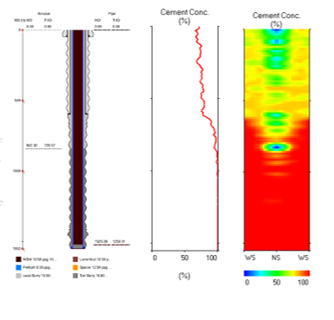
This paper examines the performance of a latex additive in a 7-inch production casing cementing operation, focusing on its role in improving zonal isolation and preventing gas migration. The study uses data from, Cement Hydration Analyzer (CHA), Static Gel Strength Analyzer (SGSA), Cement Bond Logs (CBL), and Ultrasonic Imaging Tools (USIT) to assess the latex additive's impact on cement bond quality and integrity. Primary cementing practices are critical for ensuring well integrity and productivity. Latex additives strengthen the bond between casing and formations, improving zonal isolation and gas migration control. These additives enhance the mechanical properties of cement slurries, creating a resilient seal for hydrocarbon production demands. Advanced technologies like CHA and SGSA provide real-time monitoring of the cement hydration process, offering valuable views into mechanical property development and potential weaknesses in preventing fluid migration. The study shows how latex additives optimize hydrocarbon extraction, safeguard well integrity, and develop new methods to mitigate gas migration. It is concluded that using latex additives, combined with simulations to analyze displacement efficiency, flow potential, and critical static gel strength, enhances cementing operations and prevents gas migration. This approach may also lead to cost savings by potentially eliminating the need for ultrasonic logging in future latex jobs.
Downloads
References
Abdul-Rahman, R., & Chong, A. (1997). Cementing Multilateral Well With Latex Cement. SPE/IADC Drilling Conference, SPE-37623-MS. doi: 10.2118/37623-MS
Allouche, M., Guillot, D., Hayman, A. J., Butsch, R. J., & Morris, C. W. (2006). Cement Job Evaluation. In E. B. Nelson & D. Guillot (Eds.), Well Cementing (2nd ed., pp. 549–612). Schlumberger.
American Petroleum Institute. (1997). API TR 10 TR2 Shrinkage and Expansion in Oilwell Cements.
American Petroleum Institute. (2010a). API RP 10B-2: Recommended Practice for Testing Well Cements.
American Petroleum Institute. (2010b). API Standard 65—Part 2:Isolating Potential Flow Zones During Well Construction.
Brandl, A., Cutler, J., Seholm, A., Sansil, M., & Braun, G. (2011). Cementing Solutions for Corrosive Well Environments. SPE Drilling & Completion, 26(02), 208–219. doi: 10.2118/132228-PA
Broni-Bediako, Eric Ofori-Sarpong, Grace Joel, & Ogbonna F. (2016). Oil Well Cement Additives: A Review of the Common Types. Oil Gas Res, 2, 1. doi: 10.4172/ogr.1000112
Chandler Engineering Company, LLC. (2016). Instruction Manual Model 5265 Static Gel Strength Analyzer.
Chandler Engineering Company, LLC. (2021). Instruction Manual Model 7200 Cement Hydration Analyzer.
Daccord, G., & Baret, J. F. (1994). How Fluid Loss Influences Primary Cementing: Literature Review and Methodology. SPE Drilling & Completion, 9(02), 133–138. doi: 10.2118/25150-PA
Gaurina-Međimurec, N., Sedić, K., Čajić, A., & Matijević, A. (2017). Effect of Microblock on the Compressive Strength of Portland Cement at Elevated Temperatures. Volume 8: Polar and Arctic Sciences and Technology; Petroleum Technology, V008T11A041. doi: 10.1115/OMAE2017-62455
Jones, R. R., & Carpenter, R. B. (1991). New Latex, Expanding Thixotropic Cement Systems Improve Job Performance and Reduce Costs. All Days, SPE-21010-MS. doi: 10.2118/21010-MS
Liu, G. (Ed.). (2021). Applied well cementing engineering. Gulf Professional Publishing.
Low, N., Daccord, G., & Bedel, J.-P. (2003). Designing Fibered Cement Slurries for Lost Circulation Applications: Case Histories. SPE Annual Technical Conference and Exhibition, SPE-84617-MS. doi: 10.2118/84617-MS
Mohamed, A., Giovannetti, B., Salehi, S., & Muhammed, F. (2022). A Novel Cement Additive to Prevent Gas Migration in Producing and Abandoned Oil and Gas Wells. Day 3 Wed, November 02, 2022, D031S103R001. doi: 10.2118/211513-MS
Murtaza, M., Tariq, Z., Rahman, M. K., Kamal, M. S., & Mahmoud, M. (2021). Novel Expandable Cement System for Prevention of Sustained Casing Pressure and Minimization of Lost Circulation. ACS Omega, 6(7), 4950–4957. doi: 10.1021/acsomega.0c05999
Nabi, A. G., Qureshi, S. A., & Arif, M. U. (2010). Designing of Ultralight Slurry for Liner Cementation: Case Study. All Days, SPE-132694-MS. doi: 10.2118/132694-MS
Pavlock, C., Tennison, B., Thompson, J., & Darbe, R. (2012). Latex-Based Cement Design: Meeting the Challenges of the Haynesville Shale. All Days, SPE-152730-MS. doi: 10.2118/152730-MS
Rodriguez, W. J., Fleckstein, W. W., & Eustes, A. W. (2003). Simulation of Collapse Loads on Cemented Casing Using Finite Element Analysis. SPE Annual Technical Conference and Exhibition, SPE 85466.
Sabins, F. L., & Maki, V. (1999). “Acoustic method for determining the static gel strength of a cement slurry.
Shaposhnikov, P., Thierry, S., & Lake, P. (2017). New Generation of Ultrasonic Technology for Cement Evaluation in Complex Environments. Day 2 Tue, May 02, 2017, D021S020R006. doi: 10.4043/27824-MS
Tao, C., Rosenbaum, E., Kutchko, B. G., & Massoudi, M. (2021). A Brief Review of Gas Migration in Oilwell Cement Slurries. Energies, 14(9), 2369. doi: 10.3390/en14092369
Vektaris, B., Smetonaitė, E., & Vilkas, V. (2003). The Influence of Polymer Latex And Silica Fume Additives On The Properties Of Cement Mortar And Concrete. Journal of Civil Engineering and Management, 9(2), 146–152. doi: 10.1080/13923730.2003.10531318
Wang, H., Tao, G., & Shang, X. (2016). Understanding acoustic methods for cement bond logging. The Journal of the Acoustical Society of America, 139(5), 2407–2416. doi: 10.1121/1.4947511
Downloads
Published
Issue
Section
License
Copyright (c) 2025 Journal of Geoscience, Engineering, Environment, and Technology

This work is licensed under a Creative Commons Attribution-ShareAlike 4.0 International License.
Copyright @2019. This is an open-access article distributed under the terms of the Creative Commons Attribution-ShareAlike 4.0 International License which permits unrestricted use, distribution, and reproduction in any medium. Copyrights of all materials published in JGEET are freely available without charge to users or / institution. Users are allowed to read, download, copy, distribute, search, or link to full-text articles in this journal without asking by giving appropriate credit, provide a link to the license, and indicate if changes were made. All of the remix, transform, or build upon the material must distribute the contributions under the same license as the original.


