Performance Metrics of Deep Learning Models in EHR Analysis: A Systematic Review
DOI:
https://doi.org/10.25299/itjrd.2025.24176Keywords:
Electronic Health Records, Convolutional Neural Networks, Recurrent Neural Network, Long Short-Term Memory, Performance MetricsAbstract
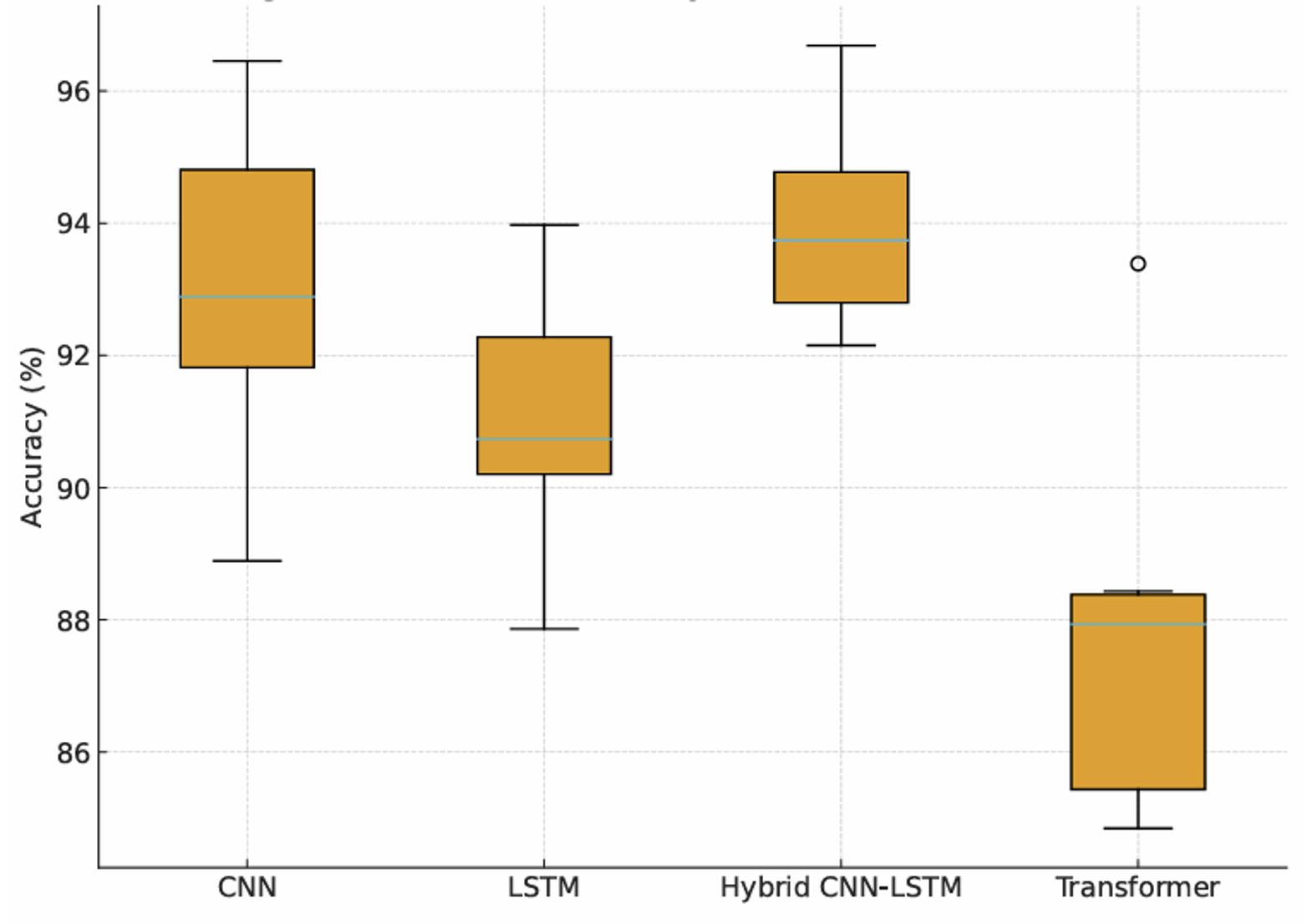
The rapid growth of Electronic Health Records (EHRs), generating 30% of global data with an annual increase of 36%, presents both opportunities and challenges for healthcare analytics. Traditional methods struggle with the complexity of EHR data, prompting the adoption of deep learning (DL) to uncover patterns and improve patient care. This systematic review, adhering to PRISMA guidelines, analyzes 82 peer-reviewed studies from 2017 to 2024 to evaluate the performance of five DL architectures Convolutional Neural Networks (CNNs), Recurrent Neural Networks (RNNs), Long Short-Term Memory (LSTM) networks, hybrid CNN-LSTM models, and Transformer-based models in EHR applications. CNNs achieved high accuracy (90–95%) in medical imaging, while LSTMs excelled in sequential tasks like ICU readmission prediction (88–93%). Hybrid CNN-LSTM models outperformed others, reaching up to 96% accuracy in multimodal tasks such as sepsis prediction [79]. Transformers, though computationally intensive, showed strong potential for clinical note analysis. Despite these advances, challenges like model interpretability, data privacy, and computational demands persist. This study provides a comprehensive benchmark of DL performance metrics across EHR tasks, offering insights into their practical applications and highlighting future directions, such as explainable AI and federated learning, to enable scalable, privacy-preserving healthcare solutions. By synthesizing these findings, this review guides researchers and clinicians in leveraging DL to enhance data-driven healthcare.
Downloads
References
[1] ISO, “Electronic Health Records Explained,” ISO, 2024. https://www.iso.org/healthcare/electronic-health-records (accessed Jan. 02, 2025).
[2] A. O. Adeniyi, J. O. Arowoogun, R. Chidi, C. A. Okolo, and O. Babawarun, “The impact of electronic health records on patient care and outcomes: A comprehensive review,” World Journal of Advanced Research and Reviews, vol. 21, no. 2, pp. 1446–1455, 2024, doi: https://doi.org/10.30574/wjarr.2024.21.2.0592.
[3] O. B. Adoghe, B. A. Ikharo, H. E. Amhenrior, J. Abiodun, and E. B. Chukwu, “Data Collection Module for a Centralized Electronic Health Records System,” Journal of Engineering Research Innovation and Scientific Development (JERISD), vol. 2, no. 1, pp. 11–19, Mar. 2024, doi: https://doi.org/10.61448/jerisd21242.
[4] Karyl Claire Derecho et al., “Technology adoption of electronic medical records in developing economies: A systematic review on physicians’ perspective,” DIGITAL HEALTH, vol. 10, Jan. 2024, doi: https://doi.org/10.1177/20552076231224605.
[5] OECD, “Progress on implementing and using electronic health record systems,” OECD, 2024. https://www.oecd.org/en/publications/progress-on-implementing-and-using-electronic-health-record-systems_4f4ce846-en.html (accessed Jan. 02, 2025).
[6] A. Callaway, “The Healthcare Data Explosion,” www.rbccm.com, 2024. https://www.rbccm.com/en/gib/healthcare/episode/the_healthcare_data_explosion (accessed Jan. 02, 2025).
[7] GMinsights, “Electronic Health Record (EHR) Market Size - Forecast Report 2027,” Global Market Insights Inc., 2024. https://www.gminsights.com/industry-analysis/electronic-health-record-market (accessed Jan. 02, 2025).
[8] M. K. Kim, C. Rouphael, J. McMichael, N. Welch, and S. Dasarathy, “Challenges in and Opportunities for Electronic Health Record-Based Data Analysis and Interpretation,” Gut and Liver, 2024, doi: https://doi.org/10.5009/gnl230272.
[9] Harpriya Khela et al., “Real world challenges in maintaining data integrity in Electronic Health Records in a Cancer Program,” Technical Innovations & Patient Support in Radiation Oncology, pp. 100233–100233, Jan. 2024, doi: https://doi.org/10.1016/j.tipsro.2023.100233.
[10] N. Culbertson, “Council Post: The Skyrocketing Volume Of Healthcare Data Makes Privacy Imperative,” Forbes, Aug. 12, 2024. Accessed: Jan. 02, 2025. [Online]. Available: https://www.forbes.com/councils/forbestechcouncil/2021/08/06/the-skyrocketing-volume-of-healthcare-data-makes-privacy-imperative/
[11] C. Stewart, “Healthcare data volume globally 2020 forecast,” Statista, 2020. https://www.statista.com/statistics/1037970/global-healthcare-data-volume/ (accessed Jan. 02, 2025).
[12] A. Aldoseri, K. N. A. - Khalifa, and A. M. Hamouda, “Re-Thinking Data Strategy and Integration for Artificial Intelligence: Concepts, Opportunities, and Challenges,” Applied Sciences, vol. 13, no. 12, pp. 7082–7082, 2023, doi: https://doi.org/10.3390/app13127082.
[13] M. Y. Shakor and M. I. Khaleel, “Recent Advances in Big Medical Image Data Analysis Through Deep Learning and Cloud Computing,” Electronics, vol. 13, no. 24, pp. 4860–4860, Dec. 2024, doi: https://doi.org/10.3390/electronics13244860.
[14] K. Batko and A. Ślęzak, “The Use of Big Data Analytics in Healthcare,” Journal of Big Data, vol. 9, no. 1, Jan. 2022, doi: https://doi.org/10.1186/s40537-021-00553-4.
[15] M. M. Taye, “Understanding of Machine Learning with Deep Learning: Architectures, Workflow, Applications and Future Directions,” Computers, vol. 12, no. 5, pp. 91–91, Apr. 2023, doi: https://doi.org/10.3390/computers12050091.
[16] J. Kufel et al., “What Is Machine Learning, Artificial Neural Networks and Deep Learning?—Examples of Practical Applications in Medicine,” Diagnostics, vol. 13, no. 15, p. 2582, Jan. 2023, doi: https://doi.org/10.3390/diagnostics13152582.
[17] H. Askr, E. Elgeldawi, H. Aboul Ella, Y. A. M. M. Elshaier, M. M. Gomaa, and A. E. Hassanien, “Deep learning in drug discovery: an integrative review and future challenges,” Artificial Intelligence Review, vol. 56, Nov. 2022, doi: https://doi.org/10.1007/s10462-022-10306-1.
[18] H. Taherdoost, “Deep Learning and Neural Networks: Decision-Making Implications,” Symmetry, vol. 15, no. 9, p. 1723, Sep. 2023, doi: https://doi.org/10.3390/sym15091723.
[19] M. Yousef and J. Allmer, “Deep learning in bioinformatics,” Turkish journal of biology, vol. 47, no. 6, pp. 366–382, Dec. 2023, doi: https://doi.org/10.55730/1300-0152.2671.
[20] O. A. Montesinos López, A. Montesinos López, and J. Crossa, “Fundamentals of Artificial Neural Networks and Deep Learning,” Multivariate Statistical Machine Learning Methods for Genomic Prediction, pp. 379–425, 2022, doi: https://doi.org/10.1007/978-3-030-89010-0_10.
[21] D. Dixon et al., “Unveiling the Influence of AI Predictive Analytics on Patient Outcomes: A Comprehensive Narrative Review,” Cureus, vol. 16, no. 5, May 2024, doi: https://doi.org/10.7759/cureus.59954.
[22] M. Khalifa and M. Albadawy, “Artificial intelligence for clinical prediction: Exploring key domains and essential functions,” Computer Methods and Programs in Biomedicine Update, vol. 5, pp. 100148–100148, Mar. 2024, doi: https://doi.org/10.1016/j.cmpbup.2024.100148.
[23] C. Chakraborty, M. Bhattacharya, S. Pal, and S. Lee, “From machine learning to deep learning: An advances of the recent data-driven paradigm shift in medicine and healthcare,” Current Research in Biotechnology, vol. 7, pp. 100164–100164, Nov. 2023, doi: https://doi.org/10.1016/j.crbiot.2023.100164.
[24] E. Calduch, N. Muscat, R. S. Krishnamurthy, and D. Ortiz, “Technological progress in electronic health record system optimization: Systematic review of systematic literature reviews,” International Journal of Medical Informatics, vol. 152, no. 1, p. 104507, Aug. 2021, doi: https://doi.org/10.1016/j.ijmedinf.2021.104507.
[25] M. Rafiq, P. Mazzocato, C. Guttmann, J. Spaak, and C. Savage, “Predictive analytics support for complex chronic medical conditions: An experience-based co-design study of physician managers’ needs and preferences,” International journal of medical informatics, pp. 105447–105447, Apr. 2024, doi: https://doi.org/10.1016/j.ijmedinf.2024.105447.
[26] Nurul Athirah Nasarudin et al., “A review of deep learning models and online healthcare databases for electronic health records and their use for health prediction,” Artificial Intelligence Review, vol. 57, no. 9, Aug. 2024, doi: https://doi.org/10.1007/s10462-024-10876-2.
[27] K. R. Islam et al., “Machine Learning-Based Early Prediction of Sepsis Using Electronic Health Records: A Systematic Review,” Journal of Clinical Medicine, vol. 12, no. 17, p. 5658, Jan. 2023, doi: https://doi.org/10.3390/jcm12175658.
[28] G. Krishnan et al., “Artificial intelligence in clinical medicine: catalyzing a sustainable global healthcare paradigm,” Frontiers in artificial intelligence, vol. 6, no. 6, Aug. 2023, doi: https://doi.org/10.3389/frai.2023.1227091.
[29] Maithri Bairy, Balachandra Muniyal, and N. P. Shetty, “Enhancing healthcare data integrity: fraud detection using unsupervised learning techniques,” International Journal of Computers and Applications, pp. 1–14, Oct. 2024, doi: https://doi.org/10.1080/1206212x.2024.2408262.
[30] L. R. Lekkala, S. Lin, G. Qiu, and O. Joseph, “Fraud Detection in Healthcare Through Intelligent Algorithms,” Dec. 21, 2024. https://www.researchgate.net/publication/387275628_Fraud_Detection_in_Healthcare_Through_Intelligent_Algorithms (accessed Jan. 02, 2025).
[31] M. Herland, R. A. Bauder, T. M. Khoshgoftaar, and O. Joseph, “Healthcare Fraud Detection Using Machine Learning,” Dec. 27, 2024. https://www.researchgate.net/publication/387470643_Healthcare_Fraud_Detection_Using_Machine_Learning (accessed Jan. 02, 2025).
[32] H. Javed, S. El-Sappagh, and T. Abuhmed, “Robustness in deep learning models for medical diagnostics: security and adversarial challenges towards robust AI applications,” Artificial Intelligence Review, vol. 58, no. 1, Nov. 2024, doi: https://doi.org/10.1007/s10462-024-11005-9.
[33] Oleksander Barmak, I. Krak, S. Yakovlev, Eduard Manziuk, Pavlo Radiuk, and V. Kuznetsov, “Toward explainable deep learning in healthcare through transition matrix and user-friendly features,” Frontiers in Artificial Intelligence, vol. 7, Nov. 2024, doi: https://doi.org/10.3389/frai.2024.1482141.
[34] J. J. Wadden, “Defining the undefinable: the black box problem in healthcare artificial intelligence,” Journal of Medical Ethics, vol. 48, no. 10, p. medethics-2021-107529, Jul. 2021, doi: https://doi.org/10.1136/medethics-2021-107529.
[35] Laith Alzubaidi et al., “A survey on deep learning tools dealing with data scarcity: definitions, challenges, solutions, tips, and applications,” Journal of Big Data, vol. 10, no. 1, Apr. 2023, doi: https://doi.org/10.1186/s40537-023-00727-2.
[36] M. Li, Y. Jiang, Y. Zhang, and H. Zhu, “Medical image analysis using deep learning algorithms,” Frontiers in Public Health, vol. 11, no. 1273253, Nov. 2023, doi: https://doi.org/10.3389/fpubh.2023.1273253.
[37] L. Longo et al., “Explainable Artificial Intelligence (XAI) 2.0: A Manifesto of Open Challenges and Interdisciplinary Research Directions,” Information Fusion, vol. 106, p. 102301, Jun. 2024, doi: https://doi.org/10.1016/j.inffus.2024.102301.
[38] P. Grzesik and D. Mrozek, “Combining Machine Learning and Edge Computing: Opportunities, Challenges, Platforms, Frameworks, and Use Cases,” Electronics, vol. 13, no. 3, p. 640, Jan. 2024, doi: https://doi.org/10.3390/electronics13030640.
[39] O. Jouini, K. Sethom, A. Namoun, N. Aljohani, M. H. Alanazi, and M. N. Alanazi, “A Survey of Machine Learning in Edge Computing: Techniques, Frameworks, Applications, Issues, and Research Directions,” Technologies, vol. 12, no. 6, p. 81, Jun. 2024, doi: https://doi.org/10.3390/technologies12060081.
[40] S. M. Varnosfaderani and M. Forouzanfar, “The Role of AI in Hospitals and Clinics: Transforming Healthcare in the 21st Century,” Bioengineering, vol. 11, no. 4, p. 337, Apr. 2024, doi: https://doi.org/10.3390/bioengineering11040337.
[41] T. Patel, Ramalingam Murugan, Gokul Yenduri, R. H. Jhaveri, Hichem Snoussi, and T. Gaber, “Demystifying Defects: Federated Learning and Explainable AI for Semiconductor Fault Detection,” IEEE Access, vol. 12, pp. 116987–117007, Jan. 2024, doi: https://doi.org/10.1109/access.2024.3425226.
[42] J. H. Holmes et al., “Why Is the Electronic Health Record So Challenging for Research and Clinical Care?,” Methods of Information in Medicine, vol. 60, no. 01/02, pp. 032–048, May 2021, doi: https://doi.org/10.1055/s-0041-1731784.
[43] Md Russel Hossain, Shohoni Mahabub, Abdullah Al Masum, and Israt Jahan, “Natural Language Processing (NLP) in Analyzing Electronic Health Records for Better Decision Making,” Journal of Computer Science and Technology Studies, vol. 6, no. 5, pp. 216–228, Dec. 2024, doi: https://doi.org/10.32996/jcsts.2024.6.5.18.
[44] J. Sedláková et al., “Challenges and best practices for digital unstructured data enrichment in health research: A systematic narrative review,” PLOS digital health, vol. 2, no. 10, pp. e0000347–e0000347, Oct. 2023, doi: https://doi.org/10.1371/journal.pdig.0000347.
[45] C.-C. Chiu, C.-M. Wu, T.-N. Chien, L.-J. Kao, C. Li, and C.-M. Chu, “Integrating Structured and Unstructured EHR Data for Predicting Mortality by Machine Learning and Latent Dirichlet Allocation Method,” International Journal of Environmental Research and Public Health, vol. 20, no. 5, p. 4340, Feb. 2023, doi: https://doi.org/10.3390/ijerph20054340.
[46] Claúdia Jorge Oliveira, H. Maria, and I. Martins, “Medication Adherence in Adults with Chronic Diseases in Primary Healthcare: A Quality Improvement Project,” Nursing Reports, vol. 14, no. 3, pp. 1735–1749, Jul. 2024, doi: https://doi.org/10.3390/nursrep14030129.
[47] W. Kanyongo and A. E. Ezugwu, “Machine learning approaches to medication adherence amongst NCD patients: A systematic literature review,” Informatics in Medicine Unlocked, vol. 38, p. 101210, 2023, doi: https://doi.org/10.1016/j.imu.2023.101210.
[48] A. Mumuni and F. Mumuni, “Automated data processing and feature engineering for deep learning and big data applications: a survey,” Journal of Information and Intelligence, Jan. 2024, doi: https://doi.org/10.1016/j.jiixd.2024.01.002.
[49] Shams Forruque Ahmed et al., “Deep learning modelling techniques: current progress, applications, advantages, and challenges,” Artificial Intelligence Review, vol. 56, no. 1, Apr. 2023, doi: https://doi.org/10.1007/s10462-023-10466-8.
[50] S. S. Avro, S. M. Atikur Rahman, T.-L. Bill) Tseng, and M. Fashiar Rahman, “A deep learning framework for automated anomaly detection and localization in fused filament fabrication,” Manufacturing Letters, vol. 41, pp. 1526–1534, Oct. 2024, doi: https://doi.org/10.1016/j.mfglet.2024.09.179.
[51] S. M. Al-Selwi et al., “RNN-LSTM: From applications to modeling techniques and beyond—Systematic review,” Journal of King Saud University - Computer and Information Sciences, vol. 36, no. 5, p. 102068, Jun. 2024, doi: https://doi.org/10.1016/j.jksuci.2024.102068.
[52] M. Cumpston et al., “Updated guidance for trusted systematic reviews: a new edition of the Cochrane Handbook for Systematic Reviews of Interventions,” Cochrane Database of Systematic Reviews, vol. 10, no. 10, Oct. 2021, doi: https://doi.org/10.1002/14651858.ed000142.
[53] Cochrane, “Cochrane Handbook for Systematic Reviews of Interventions,” Cochrane.org, 2023. https://training.cochrane.org/handbook (accessed Jan. 02, 2025).
[54] M. J. Page et al., “The PRISMA 2020 statement: an Updated Guideline for Reporting Systematic Reviews,” British Medical Journal, vol. 372, no. 71, Mar. 2021, doi: https://doi.org/10.1136/bmj.n71.
[55] A. W. Salehi et al., “A Study of CNN and Transfer Learning in Medical Imaging: Advantages, Challenges, Future Scope,” Sustainability, vol. 15, no. 7, p. 5930, Jan. 2023, doi: https://doi.org/10.3390/su15075930.
[56] K. Jabir and A. T. Raja, “Prediction of Lung Cancer from Electronic Health Records Using CNN Supported NLP,” EAI/Springer Innovations in Communication and Computing, pp. 549–560, Jan. 2023, doi: https://doi.org/10.1007/978-3-031-23683-9_40.
[57] K. S. Pokkuluri, “‘Convolutional Neural Networks for Enhancing Clinical Decision-Making,’” Biomedical Journal of Scientific & Technical Research, vol. 56, no. 3, May 2024, doi: https://doi.org/10.26717/bjstr.2024.56.008859.
[58] J. R. Ayala Solares et al., “Deep learning for electronic health records: A comparative review of multiple deep neural architectures,” Journal of Biomedical Informatics, vol. 101, p. 103337, Jan. 2020, doi: https://doi.org/10.1016/j.jbi.2019.103337.
[59] I. Landi et al., “Deep representation learning of electronic health records to unlock patient stratification at scale,” npj Digital Medicine, vol. 3, no. 1, Jul. 2020, doi: https://doi.org/10.1038/s41746-020-0301-z.
[60] L. Dai, M. Zhou, and H. Liu, “Recent Applications of Convolutional Neural Networks in Medical Data Analysis,” Advances in Healthcare Information Systems and Administration, pp. 119–131, Dec. 2023, doi: https://doi.org/10.4018/979-8-3693-1082-3.ch007.
[61] Z. Yang and F. Emmert-Streib, “Threshold-Learned CNN for Multi-Label Text Classification of Electronic Health Records,” IEEE Access, vol. 11, pp. 93402–93419, Jan. 2023, doi: https://doi.org/10.1109/access.2023.3309157.
[62] R. Nancy Deborah, S. Alwyn Rajiv, A. Vinora, J. Priyadharshini, P. Priyanga, and K. Vidhya Lakshmi, “Scrutinization and Abstraction of Unstructured Electronic Health Records using Natural Language Processing and Deep Learning,” 2023 IEEE International Conference on Contemporary Computing and Communications (InC4), pp. 1–6, Apr. 2023, doi: https://doi.org/10.1109/inc457730.2023.10262918.
[63] G Chitra and S. M. Basha, “Systematic Literature Review on Deep Learning Techniques in Electronic Health Records,” pp. 1365–1371, Jul. 2023, doi: https://doi.org/10.1109/icesc57686.2023.10193025.
[64] A. Ashfaq, A. Sant’Anna, M. Lingman, and S. Nowaczyk, “Readmission prediction using deep learning on electronic health records,” Journal of Biomedical Informatics, vol. 97, p. 103256, Sep. 2019, doi: https://doi.org/10.1016/j.jbi.2019.103256.
[65] S. B. Golas et al., “A machine learning model to predict the risk of 30-day readmissions in patients with heart failure: a retrospective analysis of electronic medical records data,” BMC Medical Informatics and Decision Making, vol. 18, no. 1, Jun. 2018, doi: https://doi.org/10.1186/s12911-018-0620-z.
[66] N. Darabi, N. Hosseinichimeh, A. Noto, R. Zand, and V. Abedi, “Machine Learning-Enabled 30-Day Readmission Model for Stroke Patients,” Frontiers in Neurology, vol. 12, Mar. 2021, doi: https://doi.org/10.3389/fneur.2021.638267.
[67] M. Pishgar, J. Theis, M. Del Rios, A. Ardati, H. Anahideh, and H. Darabi, “Prediction of unplanned 30-day readmission for ICU patients with heart failure,” BMC Medical Informatics and Decision Making, vol. 22, no. 1, May 2022, doi: https://doi.org/10.1186/s12911-022-01857-y.
[68] Birhanu Ayenew, P. Kumar, and A. Hussein, “Incidence and predictors of unplanned 30-day hospital readmissions among heart failure patients in Ethiopia: a 5-year retrospective cohort study,” Scientific Reports, vol. 14, no. 1, Oct. 2024, doi: https://doi.org/10.1038/s41598-024-71257-x.
[69] Y. Zhang et al., “Development of a prediction model for the risk of 30-day unplanned readmission in older patients with heart failure: A multicenter retrospective study,” NMCD. Nutrition Metabolism and Cardiovascular Diseases, vol. 33, no. 10, pp. 1878–1887, Oct. 2023, doi: https://doi.org/10.1016/j.numecd.2023.05.034.
[70] Eitam Sheetrit, M. Brief, and O. Elisha, “Predicting unplanned readmissions in the intensive care unit: a multimodality evaluation,” Scientific Reports, vol. 13, no. 1, Sep. 2023, doi: https://doi.org/10.1038/s41598-023-42372-y.
[71] E. Mahmoudi, N. Kamdar, N. Kim, G. Gonzales, K. Singh, and A. K. Waljee, “Use of electronic medical records in development and validation of risk prediction models of hospital readmission: systematic review,” BMJ, vol. 369, p. m958, Apr. 2020, doi: https://doi.org/10.1136/bmj.m958.
[72] P. Chen, M. Zhang, X. Yu, and S. Li, “Named entity recognition of Chinese electronic medical records based on a hybrid neural network and medical MC-BERT,” BMC Medical Informatics and Decision Making, vol. 22, no. 1, Dec. 2022, doi: https://doi.org/10.1186/s12911-022-02059-2.
[73] L. Li, J. Zhao, L. Hou, Y. Zhai, J. Shi, and F. Cui, “An attention-based deep learning model for clinical named entity recognition of Chinese electronic medical records,” BMC Medical Informatics and Decision Making, vol. 19, no. S5, Dec. 2019, doi: https://doi.org/10.1186/s12911-019-0933-6.
[74] A. Madrid-García, Inés Pérez-Sancristóbal, None Leticia-Leon, None Lydia-Abásolo, Benjamín Fernández-Gutiérrez, and L. Rodríguez-Rodríguez, “Occupation Recognition and Exploitation in Rheumatology Clinical Notes: Employing Deep Learning Models for Named Entity Recognition and Knowledge Discovery in Electronic Health Records,” medRxiv (Cold Spring Harbor Laboratory), May 2024, doi: https://doi.org/10.1101/2024.05.08.24306389.
[75] M. Li, F. Liu, J. Zhu, R. Zhang, Y. Qin, and D. Gao, “Model-based clinical note entity recognition for rheumatoid arthritis using bidirectional encoder representation from transformers,” Quantitative Imaging in Medicine and Surgery, vol. 12, no. 1, pp. 184–195, Jan. 2022, doi: https://doi.org/10.21037/qims-21-90.
[76] A. C. Kiser, K. Eilbeck, and B. T. Bucher, “Developing an LSTM Model to Identify Surgical Site Infections using Electronic Healthcare Records,” AMIA Summits on Translational Science Proceedings, vol. 2023, p. 330, Jun. 2023, doi: https://doi.org/10283140/pdf/2161.
[77] G. Dhand, K. Sheoran, P. Agarwal, and S. S. Biswas, “Deep enriched salp swarm optimization based bidirectional -long short term memory model for healthcare monitoring system in big data,” Informatics in Medicine Unlocked, vol. 32, p. 101010, 2022, doi: https://doi.org/10.1016/j.imu.2022.101010.
[78] S. M. Miran, S. J. Nelson, D. Redd, and Q. Zeng-Treitler, “Using multivariate long short-term memory neural network to detect aberrant signals in health data for quality assurance,” International Journal of Medical Informatics, vol. 147, p. 104368, Mar. 2021, doi: https://doi.org/10.1016/j.ijmedinf.2020.104368.
[79] M. Beeksma, S. Verberne, A. van den Bosch, E. Das, I. Hendrickx, and S. Groenewoud, “Predicting life expectancy with a long short-term memory recurrent neural network using electronic medical records,” BMC Medical Informatics and Decision Making, vol. 19, no. 1, Feb. 2019, doi: https://doi.org/10.1186/s12911-019-0775-2.
[80] C.-C. Chiu, C.-M. Wu, T.-N. Chien, L.-J. Kao, and C. Li, “Predicting ICU Readmission from Electronic Health Records via BERTopic with Long Short Term Memory Network Approach,” Journal of Clinical Medicine, vol. 13, no. 18, p. 5503, 2024, doi: https://doi.org/10.3390/jcm13185503.
[81] J. Xia et al., “A Long Short-Term Memory Ensemble Approach for Improving the Outcome Prediction in Intensive Care Unit,” Computational and Mathematical Methods in Medicine, vol. 2019, pp. 1–10, Nov. 2019, doi: https://doi.org/10.1155/2019/8152713.
[82] Manel Mili, Asma Kerkeni, A. B. Abdallah, and M. H. Bedoui, “ICU Mortality Prediction Using Long Short-Term Memory Networks,” Lecture notes in computer science, pp. 242–251, Jan. 2022, doi: https://doi.org/10.1007/978-3-031-21753-1_24.
[83] S. Srinivas, P. Madhav, and B. Kethana, “IMPROVING PATIENT OUTCOME PREDICTION IN ICU USING ENSEMBLE DEEP LEARNING MODELS: INSIGHTS FROM THE MIMIC-III DATASET,” 2024. Accessed: Jan. 02, 2025. [Online]. Available: https://jespublication.com/specialissue/2024-V15I11030(S).pdf
[84] M. Fathima Begum and S. Narayan, “A pattern mixture model with long short-term memory network for acute kidney injury prediction,” Journal of King Saud University - Computer and Information Sciences, vol. 35, no. 4, pp. 172–182, Mar. 2023, doi: https://doi.org/10.1016/j.jksuci.2023.03.007.
[85] L. Rasmy et al., “Recurrent neural network models (CovRNN) for predicting outcomes of patients with COVID-19 on admission to hospital: model development and validation using electronic health record data,” The Lancet Digital Health, vol. 0, no. 0, Apr. 2022, doi: https://doi.org/10.1016/S2589-7500(22)00049-8.
[86] R. Chen, W. F. Stewart, J. Sun, K. Ng, and X. Yan, “Recurrent Neural Networks for Early Detection of Heart Failure From Longitudinal Electronic Health Record Data,” Circulation: Cardiovascular Quality and Outcomes, vol. 12, no. 10, Oct. 2019, doi: https://doi.org/10.1161/circoutcomes.118.005114.
[87] H. Tawfik, B. Singh, and T. Khater, “Interpretable RNN for Prediction & Understanding of Childhood Obesity: A Scenario from the UK Millennium Cohort Study,” pp. 49–53, Aug. 2024, doi: https://doi.org/10.1145/3694860.3694867.
[88] R. Grout et al., “Predicting disease onset from electronic health records for population health management: a scalable and explainable Deep Learning approach,” Frontiers in artificial intelligence, vol. 6, Jan. 2024, doi: https://doi.org/10.3389/frai.2023.1287541.
[89] C. Lam et al., “Multitask Learning With Recurrent Neural Networks for Acute Respiratory Distress Syndrome Prediction Using Only Electronic Health Record Data: Model Development and Validation Study,” JMIR Medical Informatics, vol. 10, no. 6, p. e36202, Jun. 2022, doi: https://doi.org/10.2196/36202.
[90] A. Ferreira, S. C. Madeira, M. Gromicho, M. de Carvalho, S. Vinga, and A. M. Carvalho, “Predictive Medicine Using Interpretable Recurrent Neural Networks,” Pattern Recognition. ICPR International Workshops and Challenges, pp. 187–202, 2021, doi: https://doi.org/10.1007/978-3-030-68763-2_14.
[91] Mohammad Amin Morid, O. R. Liu, and J. C. Dunbar, “Time Series Prediction Using Deep Learning Methods in Healthcare,” ACM transactions on management information systems, vol. 14, no. 1, pp. 1–29, Jan. 2023, doi: https://doi.org/10.1145/3531326.
[92] W. Wang, H. Li, L. Cui, X. Hong, and Z. Yan, “Predicting Clinical Visits Using Recurrent Neural Networks and Demographic Information,” May 2018, doi: https://doi.org/10.1109/cscwd.2018.8465194.
[93] S. Chatterjee, A. Fruhling, K. Kotiadis, and D. Gartner, “Towards new frontiers of healthcare systems research using artificial intelligence and generative AI,” Health Systems, vol. 13, no. 4, pp. 263–273, Oct. 2024, doi: https://doi.org/10.1080/20476965.2024.2402128.
[94] R. H. Alvi, Md. H. Rahman, A. A. S. Khan, and R. M. Rahman, “Deep learning approach on tabular data to predict early-onset neonatal sepsis,” Journal of Information and Telecommunication, pp. 1–21, Dec. 2020, doi: https://doi.org/10.1080/24751839.2020.1843121.
[95] Y. Xu, X. Li, H. Yao, and K. Lin, “Neural networks in drug discovery: current insights from medicinal chemists,” Future Medicinal Chemistry, vol. 11, no. 14, pp. 1669–1672, Jul. 2019, doi: https://doi.org/10.4155/fmc-2019-0118.
[96] S. Das, S. Moon, R. Kaur, G. Sharma, P. Kumar, and Urška Lavrenčič Štangar, “Artificial neural network modeling of photocatalytic degradation of pollutants: a review of photocatalyst, optimum parameters and model topology,” Catalysis Reviews, pp. 1–35, Apr. 2024, doi: https://doi.org/10.1080/01614940.2024.2338131.
[97] S. Polepaka et al., “Optimized convolutional neural network using grasshopper optimization technique for enhanced heart disease prediction,” Cogent Engineering, vol. 11, no. 1, Nov. 2024, doi: https://doi.org/10.1080/23311916.2024.2423847.
[98] M.-K. Pham et al., “Forecasting Patient Early Readmission from Irish Hospital Discharge Records Using Conventional Machine Learning Models,” Diagnostics, vol. 14, no. 21, pp. 2405–2405, Oct. 2024, doi: https://doi.org/10.3390/diagnostics14212405.
[99] H. Yadav and A. Thakker, “NOA-LSTM: An Efficient LSTM cell architecture for Time Series forecasting,” Expert Systems with Applications, pp. 122333–122333, Oct. 2023, doi: https://doi.org/10.1016/j.eswa.2023.122333.
[100] J. Xu, X. Xi, J. Chen, V. S. Sheng, J. Ma, and Z. Cui, “A Survey of Deep Learning for Electronic Health Records,” Applied Sciences, vol. 12, no. 22, p. 11709, Nov. 2022, doi: https://doi.org/10.3390/app122211709.
[101] A. Shrestha and A. Mahmood, “Review of Deep Learning Algorithms and Architectures,” IEEE Access, vol. 7, pp. 53040–53065, 2019, doi: https://doi.org/10.1109/access.2019.2912200.
[102] J. Q. Sheng, P. J.-H. Hu, X. Liu, T.-S. Huang, and Y. H. Chen, “Predictive Analytics for Care and Management of Patients With Acute Diseases: Deep Learning–Based Method to Predict Crucial Complication Phenotypes,” Journal of Medical Internet Research, vol. 23, no. 2, p. e18372, Feb. 2021, doi: https://doi.org/10.2196/18372.
[103] Sapna Singh Kshatri and D. Singh, “Convolutional Neural Network in Medical Image Analysis: A Review,” Mar. 2023, doi: https://doi.org/10.1007/s11831-023-09898-w.
[104] D. R. Sarvamangala and R. V. Kulkarni, “Convolutional neural networks in medical image understanding: a survey,” Evolutionary Intelligence, vol. 15, no. 1, Jan. 2021, doi: https://doi.org/10.1007/s12065-020-00540-3.
[105] M. Akif Yenikaya, Gökhan Kerse, and Onur Oktaysoy, “Artificial intelligence in the healthcare sector: comparison of deep learning networks using chest X-ray images,” Frontiers in Public Health, vol. 12, Apr. 2024, doi: https://doi.org/10.3389/fpubh.2024.1386110.
[106] Asha Latha Thandu and P. Gera, “A Comprehensive Review of Healthcare Prediction using Data Science with Deep Learning,” International journal of advanced computer science and applications/International journal of advanced computer science & applications, vol. 14, no. 12, Jan. 2023, doi: https://doi.org/10.14569/ijacsa.2023.0141268.
[107] Supichaya Wangpitipanit, J. Lininger, and N. Anderson, “Exploring the deep learning of artificial intelligence in nursing: a concept analysis with Walker and Avant’s approach,” BMC Nursing, vol. 23, no. 1, Aug. 2024, doi: https://doi.org/10.1186/s12912-024-02170-x.
[108] Refka Ghodhbani, Taoufik Saidani, and Hafedh Zayeni, “Deploying deep learning networks based advanced techniques for image processing on FPGA platform,” Neural Computing and Applications, Jun. 2023, doi: https://doi.org/10.1007/s00521-023-08718-3.
[109] M. Nobari and H. Jahanirad, “FPGA-based implementation of deep neural network using stochastic computing,” Applied Soft Computing, vol. 137, p. 110166, Apr. 2023, doi: https://doi.org/10.1016/j.asoc.2023.110166.
[110] F. A. Mohammed, K. K. Tune, B. G. Assefa, M. Jett, and S. Muhie, “Medical Image Classifications Using Convolutional Neural Networks: A Survey of Current Methods and Statistical Modeling of the Literature,” Machine Learning and Knowledge Extraction, vol. 6, no. 1, pp. 699–735, Mar. 2024, doi: https://doi.org/10.3390/make6010033.
[111] M. Mousavi and S. Hosseini, “A deep convolutional neural network approach using medical image classification,” BMC Medical Informatics and Decision Making, vol. 24, no. 1, Aug. 2024, doi: https://doi.org/10.1186/s12911-024-02646-5.
[112] A. Khatami, A. Nazari, A. Beheshti, Thanh Thi Nguyen, Saeid Nahavandi, and J. Zieba, “Convolutional Neural Network for Medical Image Classification using Wavelet Features,” Jul. 2020, doi: https://doi.org/10.1109/ijcnn48605.2020.9206791.
[113] H. Jia, J. Zhang, K. Ma, X. Qiao, L. Ren, and X. Shi, “Application of convolutional neural networks in medical images: a bibliometric analysis,” Quantitative Imaging in Medicine and Surgery, vol. 14, no. 5, pp. 3501–3518, May 2024, doi: https://doi.org/10.21037/qims-23-1600.
[114] A. Mjahad, M. Saban, H. Azarmdel, and A. Rosado-Muñoz, “Efficient Extraction of Deep Image Features Using a Convolutional Neural Network (CNN) for Detecting Ventricular Fibrillation and Tachycardia,” Journal of Imaging, vol. 9, no. 9, p. 190, Sep. 2023, doi: https://doi.org/10.3390/jimaging9090190.
[115] X. Zhao, L. Wang, Y. Zhang, X. Han, Muhammet Deveci, and M. Parmar, “A review of convolutional neural networks in computer vision,” Artificial Intelligence Review, vol. 57, no. 4, Mar. 2024, doi: https://doi.org/10.1007/s10462-024-10721-6.
[116] D. Kumar, Ramesh Chand Pandey, and Ashish Kumar Mishra, “A review of image features extraction techniques and their applications in image forensic,” Multimedia tools and applications, Mar. 2024, doi: https://doi.org/10.1007/s11042-023-17950-x.
[117] V. Jadeja, A. L. N. Rao, A. Srivastava, S. Singh, P. Chaturvedi, and G. Bhardwaj, “Convolutional Neural Networks: A Comprehensive Review of Architectures and Application,” Sep. 2023, doi: https://doi.org/10.1109/ic3i59117.2023.10397695.
[118] S. Das, A. Tariq, T. Santos, Sai Sandeep Kantareddy, and I. Banerjee, “Recurrent Neural Networks (RNNs): Architectures, Training Tricks, and Introduction to Influential Research,” Neuromethods, pp. 117–138, Jan. 2023, doi: https://doi.org/10.1007/978-1-0716-3195-9_4.
[119] Aboozar Taherkhani, G. Cosma, and T. M. McGinnity, “A Deep Convolutional Neural Network for Time Series Classification with Intermediate Targets,” SN Computer Science/SN computer science, vol. 4, no. 6, Oct. 2023, doi: https://doi.org/10.1007/s42979-023-02159-4.
Downloads
Published
How to Cite
Issue
Section
License
Copyright (c) 2026 Olumhense Adoghe, Braimoh Ikharo , Henry Amhenrior

This work is licensed under a Creative Commons Attribution-ShareAlike 4.0 International License.
This is an open access journal which means that all content is freely available without charge to the user or his/her institution. The copyright in the text of individual articles (including research articles, opinion articles, and abstracts) is the property of their respective authors, subject to a Creative Commons CC-BY-SA licence granted to all others. ITJRD allows the author(s) to hold the copyright without restrictions and allows the author to retain publishing rights without restrictions.