Karakteristik Beton Berpori dengan Pemanfaatan Limbah Serat Bambu sebagai Material Ramah Lingkungan
Characteristics of Pervious Concrete Utilizing Bamboo Fiber Waste as an Environmentally Sustainable Material
Keywords:
Beton berpori, Serat bambu, KUAT TEKAN, LAJU INFILTRASIAbstract
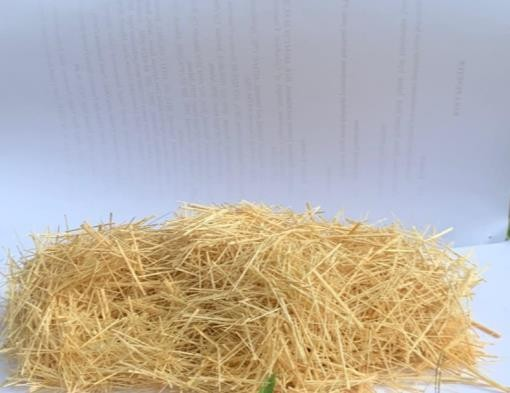
[IN] Perkembangan material maju dengan pemanfaatan limbah serat alami berupa serat bambu memiliki potensi besar karena sifat mekaniknya yang baik, seperti peningkatan kekuatan tarik, ketersediaannya yang melimpah, sifat kembang-susut yang rendah, tidak berpotensi korosi, serta merupakan sumber daya alam yang mudah dibudidayakan dan berkelanjutan. Penelitian ini bertujuan menganalisis karakteristik beton berpori dengan pemanfaatan limbah serat bambu. Metode penelitian berupa studi eksperimental di laboratorium dengan variasi penambahan serat sebesar 0%, 0,5%, 0,6%, 0,7%, 0,8%, dan 0,9% terhadap berat semen, dengan panjang serat 25 mm. Pengujian kuat tekan mengacu pada SNI 03-6825-2002, sedangkan pengujian laju infiltrasi mengacu pada ASTM C1701. Hasil penelitian menunjukkan peningkatan kuat tekan signifikan hingga variasi 0,8%, dengan nilai optimum sebesar 26,10 MPa, dibandingkan beton tanpa serat bambu. Namun, pada variasi 0,9% terjadi penurunan kuat tekan menjadi 23,98 MPa. Laju infiltrasi beton berpori menurun bertahap seiring bertambahnya kandungan serat, dari 65.833,69 mm/jam (0%) menjadi 47.201,56 mm/jam (0,9%), tetapi seluruh variasi tetap memenuhi standar kategori tinggi (>15.000 mm/jam). Uji statistik ANOVA satu arah menunjukkan bahwa variasi serat bambu berpengaruh signifikan terhadap kuat tekan dan laju infiltrasi. Dengan demikian, pemanfaatan limbah serat bambu mampu meningkatkan kekuatan tekan beton berpori tanpa menghilangkan fungsi infiltrasinya secara drastis. Penelitian ini mendukung potensi serat bambu sebagai material alternatif berkelanjutan dalam pengembangan beton berpori untuk aplikasi perkerasan maupun saluran resapan.
[EN] The development of advanced materials through the utilization of natural fiber waste, such as bamboo fiber, holds great potential due to its favorable mechanical properties, including improved tensile strength, abundant availability, low shrinkage–swelling behavior, non-corrosive nature, and ease of cultivation as a sustainable resource. This study aims to analyze the characteristics of pervious concrete incorporating bamboo fiber waste. The research method was an experimental laboratory study with fiber addition variations of 0%, 0.5%, 0.6%, 0.7%, 0.8%, and 0.9% by cement weight, with a fiber length of 25 mm. Compressive strength testing referred to SNI 03-6825-2002, while infiltration rate testing followed ASTM C1701. The results showed a significant increase in compressive strength up to the 0.8% variation, with an optimum value of 26.10 MPa, compared to concrete without bamboo fiber. However, at 0.9% variation, compressive strength decreased to 23.98 MPa. The infiltration rate of porous concrete gradually decreased with increasing fiber content, from 65,833.69 mm/h (0%) to 47,201.56 mm/h (0.9%), yet all variations still met the high-category standard (>15,000 mm/h). One-way ANOVA statistical analysis indicated that bamboo fiber variation had a significant effect on both compressive strength and infiltration rate. Thus, the utilization of bamboo fiber waste can enhance the compressive strength of porous concrete without drastically reducing its infiltration function. This study supports the potential of bamboo fiber as a sustainable alternative material in the development of porous concrete for pavement and infiltration channel applications.
Downloads
References
[1] M. A. Syahran, “Beton ringan berbahan fly ash dan bottom ash”, Tugas Akhir, Universitas Sriwijaya, Palembang, 2021.
[2] ACI Committee 211, Standard practice for selecting proportions for normal, heavyweight, and mass concrete (ACI 211.1-91), American Concrete Institute, 1991.
[3] ACI Committee 522, Report on pervious concrete (ACI 522R-10), American Concrete Institute, 2010.
[4] R. J. Putra and R. Pertiwi, “Pengaruh penggunaan agregat terhadap beton porous,” Jurnal Sipil Statik, 2019.
[5] M. F. Khonado, H. Manalip, and S. E. Wallah, “Kuat tekan dan permeabilitas beton porous dengan variasi ukuran agregat,” Jurnal Sipil Statik, vol. 7, no. 3, pp. 351–358, 2019.
[6] M. R. Ramadhon, “Mechanical properties of porous concrete and design recommendation for low traffic road pavement in Indonesia,” IOP Conf. Ser.: Earth Environ. Sci., vol. 794, p. 012003, 2021.
[7] C. Wijaya, “Studi eksperimental kuat tekan beton porous menggunakan variasi ukuran agregat kasar batu pecah pasca dibakar”, Jurnal Ilmiah Teknik Sipil, vol. 15 No. 1 pp.50-57, 2020.
[8] A. Javadian et al., “Banana stem fiber reinforced concrete,” Int. J. GEOMATE, vol. 14, no. 44, pp. 166–175, 2019.
[9] M. E. Hidayat, Ismeddiyanto, A. Kurniawandy, “Pengaruh penambahan serat kulit bambu terhadap sifat mekanik beton”. Jom FTEKNIK, vol. 3 No. 1 pp. 1-7.
[10] Badan Standardisasi Nasional, SNI 1969:2016: Metode uji berat jenis dan penyerapan air agregat kasar, BSN, 2016.
[11] Badan Standardisasi Nasional, SNI 03-4142-1996: Metode pengujian jumlah bahan dalam agregat yang lolos saringan No. 200 (0,075 mm), BSN, 1996.
[12] ASTM International, ASTM C136/C136M-12: Standard test method for sieve analysis of fine and coarse aggregates, ASTM, 2012.
[13] Badan Standardisasi Nasional, SNI 2417:2008: Uji keausan agregat, BSN, 2008.
[14] ASTM International, ASTM C39/C39M-18: Standard test method for compressive strength of cylindrical concrete specimens, ASTM, 2018.
[15] ASTM International, ASTM C1701/C1701M: Standard test method for infiltration rate of in place pervious concrete, ASTM, 2009.
[16] R. Ananda, and M. Fadhli, “Statistik pendidikan teori dan praktik dalam pendidikan”, Medan : CV Widya Puspita, 2018.
[17] K. Hariadi, “Penggunaan limbah kaca sebagai filler pada campuran perkerasan aspal panas,” Jurnal Teknik Sipil, vol. 26, no. 3, pp. 265–272, 2019.
Downloads
Published
How to Cite
Issue
Section
License
Copyright (c) 2026 Reza Wahyu Rivando, Shanti Wahyuni Megasari, Virgo Trisep Haris

This work is licensed under a Creative Commons Attribution-ShareAlike 4.0 International License.

This work is licensed under a Creative Commons Attribution-ShareAlike 4.0 International License.
Copyright. This is an open access article which means that all content is freely available without charge to the user or his/her institution. Jurnal Saintis allows the author(s) to hold the copyright without restriction. The copyright in the text of individual articles (including research articles, opinion articles, and abstracts) is the property of their respective authors distributed under the terms of the Creative Commons Attribution-ShareAlike 4.0 International License which permits unrestricted use, distribution, and reproduction in any medium. Users are allowed to read, download, copy, distribute, search, or link to full-text articles in this journal without asking by giving appropriate credit, provide a link to the license, and indicate if changes were made.