Prospektivitas Pengembangan Kawasan Industri Tenayan Kota Pekanbaru
Prospectivity of the Development of Tenayan Industrial Estate in Pekanbaru
DOI:
https://doi.org/10.25299/saintis.2025.vol25(02).25321Keywords:
Sektor Unggulan, Pengembangan Kawasan Industri, ProspektivitasAbstract
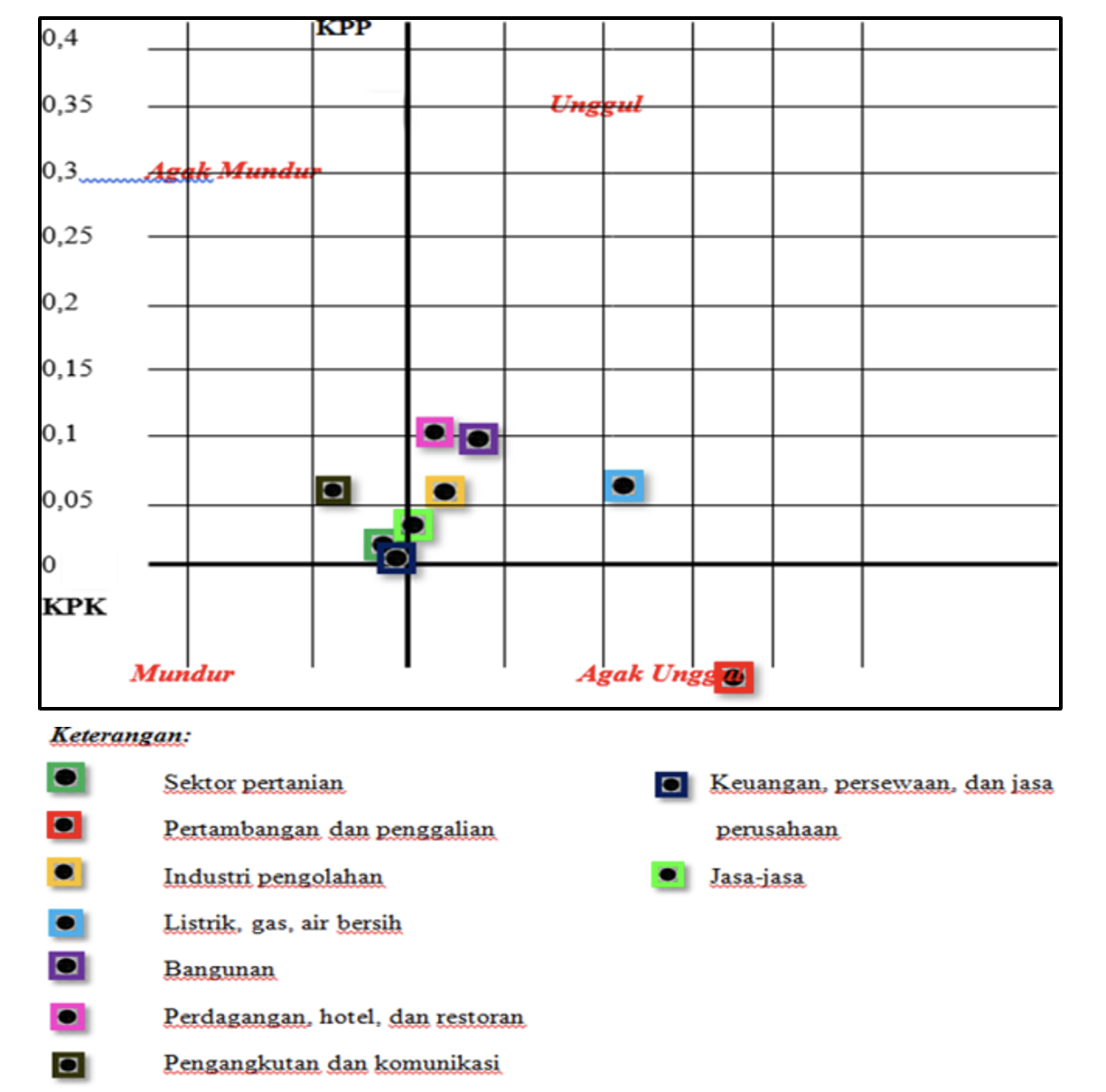
[IN] Kecamatan Tenayan Raya memiliki jumlah industri terbanyak dibandingkan kecamatan lainnya di Kota Pekanbaru, yaitu sebanyak 866 unit industri. Sektor industri menjadi salah satu sektor yang berpotensi besar dalam memberikan kontribusi terhadap pendapatan Kota Pekanbaru. Dengan adanya rencana pembangunan Kawasan Industri Tenayan dalam draft RTRW Kota Pekanbaru, diperlukan kajian mengenai tingkat prospektivitas pengembangan kawasan industri tersebut. Penelitian ini bertujuan untuk mengidentifikasi sektor unggulan di Kecamatan Tenayan Raya, mengetahui potensi serta permasalahan yang berkaitan dengan sektor industri, dan menilai tingkat prospektivitas pengembangan kawasan industri di wilayah tersebut. Metode yang digunakan meliputi analisis Location Quotient (LQ) dan Shift and Share untuk menentukan sektor unggulan, analisis SWOT (SAP dan ETOP) untuk mengidentifikasi potensi serta permasalahan sektor industri, dan analisis deskriptif untuk menilai prospektivitas pengembangannya. Hasil penelitian menunjukkan bahwa berdasarkan analisis LQ, sektor industri memperoleh nilai skor 1, yang menandakan bahwa sektor ini merupakan sektor basis yang potensial untuk dikembangkan. Analisis Shift and Share juga menempatkan sektor industri pada posisi kuadran unggulan. Sementara itu, hasil analisis SWOT (SAP & ETOP) menunjukkan bahwa pengembangan kawasan industri di Kecamatan Tenayan Raya memiliki prospek yang baik untuk dikembangkan di masa mendatang.
[EN] Tenayan Raya District has the largest number of industries compared to other districts in Pekanbaru City, with a total of 866 industrial units. The industrial sector is one of the key sectors with great potential to contribute significantly to the city’s revenue. With the inclusion of the Tenayan Industrial Area development plan in the draft of Pekanbaru City’s Spatial Plan (RTRW), it is necessary to conduct a study on the level of prospectivity for developing this industrial area. This study aims to identify the leading sectors in Tenayan Raya District, to analyze the potential and challenges related to the industrial sector, and to assess the level of prospectivity for the development of the industrial area in the region. The methods used include Location Quotient (LQ) and Shift and Share analyses to determine the leading sectors, SWOT analysis (SAP and ETOP) to identify the potential and issues related to the industrial sector, and a descriptive analysis to evaluate the development prospects. The results of the study show that, based on the LQ analysis, the industrial sector obtained a score of 1, indicating that it is a basic sector with strong development potential. The Shift and Share analysis also places the industrial sector in the leading quadrant. Meanwhile, the results of the SWOT (SAP & ETOP) analysis reveal that the development of the industrial area in Tenayan Raya District has good prospects for future growth.
Downloads
References
[1] R. Indonesia, Undang-Undang Republik Indonesia Nomor 3 Tahun 2014 tentang Perindustrian. 2014.
[2] E. A. Setyawati, “Pengaruh Kegiatan Operasi Kawasan Industri terhadap Perkembangan Sosial Ekonomi Masyarakat Pedesaan,” IPB, Bogor, 2002.
[3] B. Soedarso, “Pengembangan Promosi dan Investasi Kawasan (Teritorial Marketing) sebagai Wujud Pemanfaatan Ruang untuk Mendukung Pengembangan Ekonomi Wilayah,” J. Pengemb. Wil. dan Kota, vol. 3, no. 1, pp. 10–11, 2001.
[4] R. Tarigan, Perencanaan Pembangunan Wilayah. Jakarta: PT Bumi Aksara, 2004.
[5] Abdurachmat and Maryani, Geografi Ekonomi. Bandung: Jurusan Pendidikan Geografi FPIPS, IKIP Bandung, 1997.
[6] R. W. Dirdjojuwono, Kawasan Industri Indonesia. Bogor: Pustaka Wirausaha, 2004.
[7] T. Kwanda, “Pengembangan Kawasan Industri di Indonesia,” Dimens. Tek. Arsit., vol. 28, no. 1, 2000.
[8] B. P. Statistik, “Kota Pekanbaru dalam Angka 2019,” Pekanbaru, 2019.
[9] D. Arifandi, “Evaluasi Kesesuaian Lahan Untuk Kawasan Industri Besar di Kota Semarang,” Universitas Negeri Semarang, 2013.
[10] P. K. Pekanbaru, “Draft RTRW Kota Pekanbaru,” 2013.
[11] M. Djojodipuro, Pengantar Ekonomi untuk Perencanaan. Jakarta: UI-Press, 1994.
[12] N. A. Ningsih, “Strategi Pengembangan Kawasan Industri Tenayan Kota Pekanbaru,” Universitas Islam Riau, Pekanbaru, 2018.
[13] R. Indonesia, Peraturan Pemerintah Republik Indonesia Nomor 142 Tahun 2015 tentang Kawasan Industri. 2015.
[14] R. Indonesia, Peraturan Menteri Pekerjaan Umum No. 41 Tahun 2007 tentang Pedoman Kriteria Teknis Kawasan Budidaya. 2007.
[15] Menteri Perindustrian RI, “Peraturan Menteri Perindustrian RI Nomor 40/M-IND/PER/7/2016 tentang Pedoman Teknis Pembangunan Kawasan Industri,” 2016.
[16] Kuntjojo, Metode Penelitian. Kediri: Universitas Nusantara PGRI, 2009.
[17] P. Astuti, “Skenario Masa depan Kabupaten Garut The Future’s scenario of Kabupaten Garut,” vol. 13, no. April, pp. 33–38, 2013, [Online]. Available: https://scholar.archive.org/work/zmna3psxnfhrlenv7igm4esc3y/access/wayback/http://jurnal.uir.ac.id/index.php/JS/article/viewFile/114/80
[18] E. M. Sangadji, Metodologi Penelitian. Yogyakarta: Andi Offsite, 2010.
[19] S. Arikunto, Metode Penelitian Kualitatif. Jakarta: Bumi Aksara, 2006.
[20] L. Muta’ali, Perencanaan Pengembangan Wilayah. Yogyakarta: Badan Penerbit Fakultas Geografi UGM, 2015.
[21] P. Astuti and L. Maisaroh, “Prospektifitas Pelabuhan Penyeberangan Ro-ro Dumai Terhadap Sektor Fisik dan Ekonomi Kelurahan Pangkalan Sesai, Kecamatan Dumai Barat,” Universitas Islam Riau, Pekanbaru, 2013.
Downloads
Published
How to Cite
Issue
Section
License
Copyright (c) 2025 Puji Astuti, Leo Grandisianto Fahlepi

This work is licensed under a Creative Commons Attribution-ShareAlike 4.0 International License.

This work is licensed under a Creative Commons Attribution-ShareAlike 4.0 International License.
Copyright. This is an open access article which means that all content is freely available without charge to the user or his/her institution. Jurnal Saintis allows the author(s) to hold the copyright without restriction. The copyright in the text of individual articles (including research articles, opinion articles, and abstracts) is the property of their respective authors distributed under the terms of the Creative Commons Attribution-ShareAlike 4.0 International License which permits unrestricted use, distribution, and reproduction in any medium. Users are allowed to read, download, copy, distribute, search, or link to full-text articles in this journal without asking by giving appropriate credit, provide a link to the license, and indicate if changes were made.