Pengaruh Penambahan Admixture Adhesive Manufacturer 78 Terhadap Kuat Tekan Beton Dengan Metode Self Healing Concrete
The Effect of Additional Admixture Adhesive Manufacture 78 On The Concrete Compressive Strength Using the Self-Healing Concrete Method
DOI:
https://doi.org/10.25299/saintis.2023.vol23(01).25239Keywords:
Self Healing Concrete, Ekstrak Limbah Sayuran, Adhesive Manufacture 78, Kuat Tekan BetonAbstract
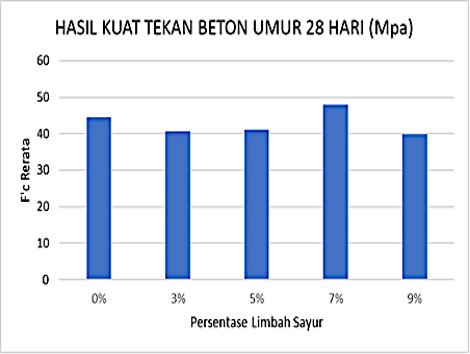
[IN] Penelitian ini menggunakan metode Self Healing Concrete yang dimana beton diharapkan mampu memperbaiki dirinya sendiri dari kerusakan retakan dengan memanfaatkan bakteri yang didapat dari ekstrak limbah sayuran. Untuk mengetahui peningkatan kekuatan beton setelah dicampur dengan bahan tambah limbah tomat dan Mastersure1007 additive dengan metode self healing concrete dengan variasi limbah sayuran 3%, dan 0,8% Mastersure 1007 dan Mengetahui pengaruh penambahan ekstrak limbah sayuran dan Mastersure 1007 pada beton dengan metode self healing concrete terhadap kuat tekan beton Penelitian ini bersifat eksperimen (reserch) yang dilakukan dilaboratorium dengan mengacu pada ISO 140440 dengan benda uji berbentuk silinder sebanyak 27 sampel. Dan akan dilakukan uji tekan. Hasil dari penelitian ini, kuat tekan beton tanpa diretakkan variasi 1% adhesive manufacturer 78 dan 3%, 5%, 7%, 9% limbah sayuran secara berturut-turut adalah 44,59 Mpa, 42,28 Mpa, 42,71 Mpa, 49,85 Mpa, 41,25 Mpa, sedangkan kuat tekan beton diretakkan variasi 3%, 5%, 7%, 9% secara berturut-turut adalah 36,85 Mpa, 38,02 Mpa, 42,16 Mpa, 44,68 Mpa. Nilai slump pada beton campuran 1% adhesive manufacturer 78 memiliki nilai 43 mm, pada beton variasi 3%, 5%, 7%, 9% secara berturut-turut adalah 44,33 mm, 45,66 mm, 48,33 mm, 53,66 mm, sedangkan beton diretakkan memiliki nilai slump variasi 3%, 5%, 7%, 9% secara berturut-turut adalah 48,66 mm, 47 mm, 44,33 mm, 42,66 mm. Pemulihan retakan pada beton yang dilihat secara visual dengan perawatan selama 28 hari, dapat menutup retakan yang berukuran sehelai rambut pada beton.
[EN] This study uses the Self Healing Concrete method where the concrete is expected to be able to repair itself from crack damage by utilizing bacteria obtained from vegetable waste extracts. To determine the increase in the strength of concrete after being mixed with tomato waste and adhesive manufacturer 78 (AM78) additive with a self-healing concrete method with variations of vegetable waste 3%, 5%, 7%, 9% and 1% adhesive manufacturer 78 and to know the effect of adding vegetable waste extract and Adhesive Manufacturer (AM78) on concrete with self-healing concrete method for the recovery of cracks that occur in concrete. This research is experimental (reserch) conducted in the laboratory with reference to SNI 03-2834-2000 with a cube-shaped test object of 27 samples. The treatment period is 28 days and a pressure test will be carried out. Crack recovery in concrete can only be seen visually by taking pictures. The results of this study, the compressive strength of the uncracked concrete was 1% adhesive manufacturer 78 and 3%, 5%, 7%, 9% vegetable waste respectively 44.59 Mpa, 42.28 Mpa, 42.71 Mpa, 49.85 Mpa, 41.25 Mpa, while the compressive strength of cracked concrete with variations of 3%, 5%, 7%, 9% respectively were 36.85 Mpa, 38.02 Mpa, 42.16 Mpa, 44.68 MPa. The slump value in the 1% adhesive manufacturer 78 mixed concrete has a value of 43 mm, the variation of 3%, 5%, 7%, 9% concrete is 44.33 mm, 45.66 mm, 48.33 mm, 53 respectively. .66 mm, while the cracked concrete has slump values of variations of 3%, 5%, 7%, 9% respectively are 48.66 mm, 47 mm, 44.33 mm, 42.66 mm. The visual restoration of cracks in concrete with 28 days of treatment can close hair-sized cracks in concrete.
Downloads
References
[1] M. B. Khaliq, W. & Ehsan, “Penyembuhan Retak pada Beton Menggunakan Berbagai Teknik Penyembuhan Diri Pengaruh Bio”,” Konstr. dan Bahan Bangunan ., vol. 102, pp. 349–357, 2016.
[2] N. Van Tittelboom, K., & De Belie, “Self-healing in cementitious materials-a review.,” Mater., vol. Vol. 6, no. Issue 6, 2013, doi: https://doi.org/10.3390/ma6062182.
[3] E. Tziviloglou, E.; Wiktor, V.; Jonkers, H. M.; & Schlangen, “Bacteriabased Self-Healing Concrete to Increase Liquid Tightness,” Constr. Build. Mater., vol. 122, pp. 118–125., 2016.
[4] N. Sayuti, I., & Hardianti, “IDENTIFIKASI BAKTERI PADA SAMPAH ORGANIK PASAR KOTA PEKANBARU DAN POTENSINYA SEBAGAI RANCANGAN LEMBAR KERJA SISWA ( LKS ) BIOLOGI SMA,” vol. 13(1), 51–, 2016.
[5] V. Li, Penyembuhan autogenous komposit semen yang direkayasa di bawah siklus basah-kering. 2009.
[6] Tjokrodimuljo, Teknologi Beton. Yogyakarta, 2007.
[7] A. Gunawan, “PERBAIKAN PERILAKU KUAT TEKAN BETON AIR RAWA DENGAN,” Stud. Tek. Sipil, vol. 6(1), pp. 73–80., 2002.
[8] A. Rochani, I.; Prasetyo, A.; & Kurniawan, Pemanfaatan Batu Apung (Pumice) sebagai Agent Perbaikan Kerusakan Retak pada Beton, vol. 30, 49– 57. 2016.
[9] S. Gusti, I., Sudika, M., Astariani, N. K., Gede, I., & Kanca, “PENGARUH PENAMBAHAN ADMIXTURE ADHESIVE MANUFACTURER,” Jur. Tek. Gradien, vol. Vol. 9, no. Issue 2, 2018.
[10] S. 03-1968., “Metode Pengujian Tentang Analisis Saringan Agregat Halus dan Kasar,” Badan Standar Nas. Indones., pp. 1–5, 1990.
[11] S. 03-3449-2002, “Tata cara rencana pembuatan campuran beton ringan dengan agregat ringan,” Yayasan LPMB, pp. 1–32, 2002.
[12] S. W. Fauzia, I., Yanti, G., & Megasari, “Pengaruh Variasi Penambahan Bahan Aditif Consol SG terhadap Kuat Tekan Beton.,” vol. 12, pp. 155–162, 2018.
[13] A. Desmi, “Pengaruh Penggunaan Abu Jerami Dengan Penambahan Zat Additive Sikacim Concrete Terhadap Kuat Tekan Beton,” Teras J., vol. 8(1), p. 339, 2018, doi: https://doi.org/10.29103/tj.v8i1.120.
[14] A. Herlambang, W., & Saraswati, “Bio Concrete : Self-Healing Concrete, Aplikasi Mikroorganisme Sebagai Solusi Pemeliharaan Infrastruktur Rendah Biaya,” Simp. II – UNIID 2017, pp. 520–524., 2018.
[15] B. A. Seifan M, Samani AK, “Presipitasi kalsium karbonat yang diinduksi menggunakan spesies Bacillus,” 2016.
Downloads
Published
How to Cite
Issue
Section
License
Copyright (c) 2023 Nanda Hasyim, Firman Syarif, Mahadi Kurniawan, Vella Anggrena

This work is licensed under a Creative Commons Attribution-ShareAlike 4.0 International License.

This work is licensed under a Creative Commons Attribution-ShareAlike 4.0 International License.
Copyright. This is an open access article which means that all content is freely available without charge to the user or his/her institution. Jurnal Saintis allows the author(s) to hold the copyright without restriction. The copyright in the text of individual articles (including research articles, opinion articles, and abstracts) is the property of their respective authors distributed under the terms of the Creative Commons Attribution-ShareAlike 4.0 International License which permits unrestricted use, distribution, and reproduction in any medium. Users are allowed to read, download, copy, distribute, search, or link to full-text articles in this journal without asking by giving appropriate credit, provide a link to the license, and indicate if changes were made.