
Review of Fly Ash-Based Zero-Cement Concrete Performance
DOI:
https://doi.org/10.25299/saintis.2025.vol25(02).21840Keywords:
fly ash, Alkali-activated binder, Geopolymer, Sustainable construction, Zero-Cement Concrete (ZCC)Abstract
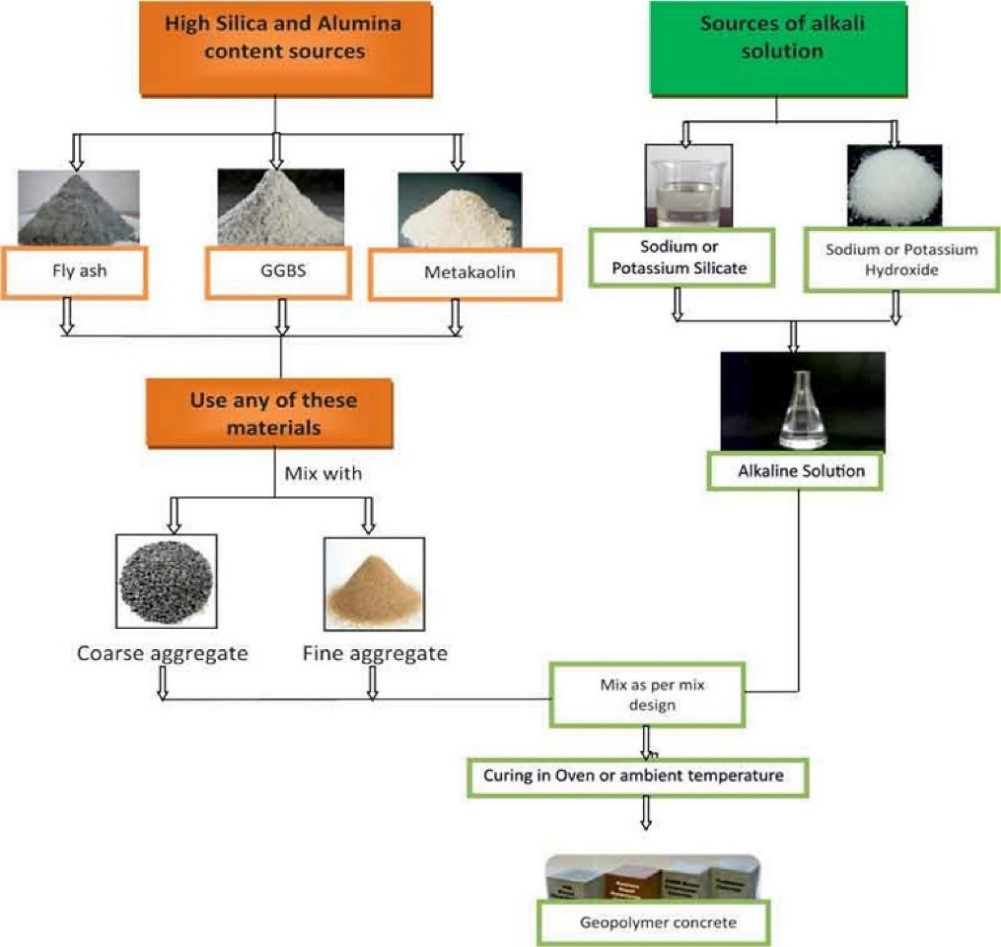
The urgent need to reduce the environmental impact of construction materials has led to increasing interest in sustainable alternatives to Ordinary Portland Cement (OPC). Among emerging solutions, Zero-Cement Concrete (ZCC) utilizing fly ash (FA) as a primary binder offers a viable pathway for lowering CO₂ emissions and reusing industrial by-products. This review investigates the key components, mixing mechanisms, curing conditions, and mechanical performance of FA-based ZCC. FA, particularly Class F and Class C, in combination with alkaline activators such as sodium hydroxide (NaOH) and sodium silicate (Na₂SiO₃), plays a crucial role in the geopolymerization process that forms the cementitious matrix. The compressive strength, modulus of elasticity, and flexural strength of ZCC are influenced by multiple factors, including activator molarity, SS/SH ratio, binder-aggregate proportions, and curing regime. Experimental studies indicate that with optimized mixing and curing parameters, FA–ZCC can achieve mechanical performance comparable to or exceeding OPC concrete. However, the absence of standardized mix design procedures and field-curing strategies remains a challenge. This study highlights the need for further research on durability, life-cycle assessment, and in-situ applications to fully realize the potential of ZCC as a mainstream, eco-efficient construction material.
Downloads
References
[1] Y. X. Tang et al., “Artificial Neural Network-Forecasted Compression Strength of Alkaline-Activated Slag Concretes,” Sustainability (Switzerland), vol. 14, no. 9, 2022, doi: 10.3390/su14095214.
[2] M. Ma, Y. Zhou, V. W. Y. Tam, and K. N. Le, Life Cycle Assessment of the Environmental Impacts of Virgin Concrete Replacement by CO2 Concrete in a Residential Building, vol. 356 LNCE. 2023. doi: 10.1007/978-981-99-3330-3_48.
[3] K. Zerfu and J. J. Ekaputri, “Review on alkali-activated fly ash based geopolymer concrete,” in Materials Science Forum, 2016. doi: 10.4028/www.scientific.net/MSF.841.162.
[4] J. M. Paris, J. G. Roessler, C. C. Ferraro, H. D. Deford, and T. G. Townsend, “A review of waste products utilized as supplements to Portland cement in concrete,” 2016. doi: 10.1016/j.jclepro.2016.02.013.
[5] V. K. J. Bohra, R. Nerella, and S. R. C. Madduru, “Material properties, processing & characterization of fly ash based geopolymer,” in Materials Today: Proceedings, 2019. doi: 10.1016/j.matpr.2019.10.099.
[6] V. A. Abdelmseeh, J. C. Jofriet, S. C. Negi, and G. L. Hayward, “Corrosion of Reinforced Concrete Specimens Exposed to Hydrogen Sulfide and Sodium Sulfate,” Agricultural Engineering International: the CIGR Ejournal, vol. VII, 2005.
[7] Y. Ding, J. G. Dai, and C. J. Shi, “Mechanical properties of alkali-activated concrete: A state-of-the-art review,” Constr Build Mater, vol. 127, 2016, doi: 10.1016/j.conbuildmat.2016.09.121.
[8] M. Wasim, A. Abadel, B. H. Abu Bakar, and I. M. H. Alshaikh, “Future directions for the application of zero carbon concrete in civil engineering – A review,” Case Studies in Construction Materials, vol. 17, 2022, doi: 10.1016/j.cscm.2022.e01318.
[9] P. Shoaei, F. Ameri, H. Reza Musaeei, T. Ghasemi, and C. B. Cheah, “Glass powder as a partial precursor in Portland cement and alkali-activated slag mortar: A comprehensive comparative study,” Constr Build Mater, vol. 251, 2020, doi: 10.1016/j.conbuildmat.2020.118991.
[10] G. Ramesh, “Geopolymer Concrete: A Review,” Indian Journal of Structure Engineering, vol. 1, no. 2, 2021, doi: 10.35940/ijse.a1302.111221.
[11] F. Ameri, S. A. Zareei, and B. Behforouz, “Zero-cement vs. cementitious mortars: An experimental comparative study on engineering and environmental properties,” Journal of Building Engineering, vol. 32, 2020, doi: 10.1016/j.jobe.2020.101620.
[12] T. Luukkonen, Z. Abdollahnejad, J. Yliniemi, P. Kinnunen, and M. Illikainen, “One-part alkali-activated materials: A review,” 2018. doi: 10.1016/j.cemconres.2017.10.001.
[13] A. L. Almutairi, B. A. Tayeh, A. Adesina, H. F. Isleem, and A. M. Zeyad, “Potential applications of geopolymer concrete in construction: A review,” Case Studies in Construction Materials, vol. 15, 2021, doi: 10.1016/j.cscm.2021.e00733.
[14] J. L. Provis and J. S. J. van Deventer, “Alkali Activated Materials: State-of-the-Art Report, RILEM TC 224-AAM,” Springer, vol. 13, 2014.
[15] J. Davidovits, “Chemistry of geopolymeric systems, terminology,” in Second International Conference on Geopolymer, 1999.
[16] V. S. Athira, V. Charitha, G. Athira, and A. Bahurudeen, “Agro-waste ash based alkali-activated binder: Cleaner production of zero cement concrete for construction,” 2021. doi: 10.1016/j.jclepro.2020.125429.
[17] P. Pavithra, M. Srinivasula Reddy, P. Dinakar, B. Hanumantha Rao, B. K. Satpathy, and A. N. Mohanty, “A mix design procedure for geopolymer concrete with fly ash,” J Clean Prod, vol. 133, 2016, doi: 10.1016/j.jclepro.2016.05.041.
[18] A. Bisarya, R. K. Chouhan, M. Mudgal, and S. S. Amritphale, “Fly ash based geopolymer concrete a new technology towards the greener environment: A review,” Int J Innov Res Sci Eng Technol, vol. 4, no. 12, 2015.
[19] M. N. S. Hadi, H. Zhang, and S. Parkinson, “Optimum mix design of geopolymer pastes and concretes cured in ambient condition based on compressive strength, setting time and workability,” Journal of Building Engineering, vol. 23, 2019, doi: 10.1016/j.jobe.2019.02.006.
[20] M. Nodehi and V. M. Taghvaee, “Alkali-Activated Materials and Geopolymer: a Review of Common Precursors and Activators Addressing Circular Economy,” 2022. doi: 10.1007/s43615-021-00029-w.
[21] J. Xu et al., “Research and Application Progress of Geopolymers in Adsorption: A Review,” 2022. doi: 10.3390/nano12173002.
[22] P. Gill and Parveen, “Development of Detailed Mix Design Methodology for Low Calcium Fly Ash Based Geopolymer Concrete Incorporating OPC and Crumb Rubber,” Infrastructures (Basel), vol. 7, no. 11, 2022, doi: 10.3390/infrastructures7110149.
[23] P. Suraneni, L. Burris, C. R. Shearer, and R. D. Hooton, “ASTM C618 fly ash specification: Comparison with other specifications, shortcomings, and solutions,” ACI Mater J, vol. 118, no. 1, 2021, doi: 10.14359/51725994.
[24] W. Li, E. D. Shumuye, T. Shiying, Z. Wang, and K. Zerfu, “Eco-friendly fibre reinforced geopolymer concrete: A critical review on the microstructure and long-term durability properties,” Case Studies in Construction Materials, vol. 16, 2022, doi: 10.1016/j.cscm.2022.e00894.
[25] M. Khawaji, “Hydration, Microstructure, and Properties of Fly Ash-Based Geopolymer: A Review,” Materials Science- Poland, vol. 41, no. 2, 2023, doi: 10.2478/msp-2023-0006.
[26] C. Gunasekara, M. Sandanayake, Z. Zhou, D. W. Law, and S. Setunge, “Effect of nano-silica addition into high volume fly ash–hydrated lime blended concrete,” Constr Build Mater, vol. 253, 2020, doi: 10.1016/j.conbuildmat.2020.119205.
[27] M. M. Hassoon and M. Aied Qissab, “Performance of Zero Cement Concrete Synthesized from Fly Ash: A Critical Review,” in E3S Web of Conferences, 2023. doi: 10.1051/e3sconf/202343704002.
[28] D. Behera, P. Kumar, and B. K. Nandi, “Effect of Mean Specific Gravity on Combustion Characteristics of Selected High Ash Indian Coal,” Natural Resources Research, vol. 33, no. 2, pp. 727–741, 2024, doi: 10.1007/s11053-023-10300-6.
[29] D. Behera, B. K. Nandi, and S. Bhattacharya, “Studies on combustion characteristics of density by density analyzed coal,” Journal of Energy Resources Technology, Transactions of the ASME, vol. 142, no. 1, 2020, doi: 10.1115/1.4044973.
[30] A. Naghizadeh, L. N. Tchadjie, S. O. Ekolu, and M. Welman-Purchase, “Circular production of recycled binder from fly ash-based geopolymer concrete,” Constr Build Mater, vol. 415, 2024, doi: 10.1016/j.conbuildmat.2024.135098.
[31] W. Wang, B. Wang, and S. Zhang, “Dispersion, properties, and mechanisms of nanotechnology-modified alkali-activated materials: A review,” 2024. doi: 10.1016/j.rser.2023.114215.
[32] A. Palomo, M. W. Grutzeck, and M. T. Blanco, “Alkali-activated fly ashes: A cement for the future,” Cem Concr Res, vol. 29, no. 8, 1999, doi: 10.1016/S0008-8846(98)00243-9.
[33] X. Ouyang, Y. Ma, Z. Liu, J. Liang, and G. Ye, “Effect of the sodium silicate modulus and slag content on fresh and hardened properties of alkali-activated fly ash/slag,” Minerals, vol. 10, no. 1, 2020, doi: 10.3390/min10010015.
[34] M. Amran, S. Debbarma, and T. Ozbakkaloglu, “Fly ash-based eco-friendly geopolymer concrete: A critical review of the long-term durability properties,” 2021. doi: 10.1016/j.conbuildmat.2020.121857.
[35] S. S. Arun Kumar, A. Madhavan, and S. Dharmar, “Experimental Srudy on Impact Resistance of Geopolymer Ferrocement Flat Panel,” SSRG International Journal of Civil Engineering (ICRTCETM-2017), no. Special Issue ICRTCETM-Part 4, 2017.
[36] M. Venu and T. D. Gunneswara Rao, “An Experimental Investigation of the Stress-Strain Behaviour of Geopolymer Concrete,” Slovak Journal of Civil Engineering, vol. 26, no. 2, 2018, doi: 10.2478/sjce-2018-0011.
[37] M. R. Bhina, K. Y. Liu, J. E. H. Y. Hu, and C. T. Tsai, “Investigation of the Mechanical Properties of Quick-Strength Geopolymer Material Considering Preheated-to-Room Temperature Ratio of Sand, Na2SiO3-to-NaOH Ratio, and Fly Ash-to-GGBS Ratio,” Polymers (Basel), vol. 15, no. 5, 2023, doi: 10.3390/polym15051084.
[38] Q. Fu, W. Xu, X. Zhao, M. X. Bu, Q. Yuan, and D. Niu, “The microstructure and durability of fly ash-based geopolymer concrete: A review,” 2021. doi: 10.1016/j.ceramint.2021.07.190.
[39] B. K. Singh, R. Kumar, and S. Sengupta, “Industrial Production of Fly Ash and Sand-Based Geopolymer Bricks Using Different Molarity of NaOH Solution, and Assessment of their Mechanical and Durability Properties,” Iranian Journal of Science and Technology - Transactions of Civil Engineering, vol. 48, no. 1, 2024, doi: 10.1007/s40996-023-01154-2.
[40] M. L. Nehdi, A. Marani, and L. Zhang, “Is net-zero feasible: Systematic review of cement and concrete decarbonization technologies,” 2024. doi: 10.1016/j.rser.2023.114169.
[41] ACI 211.1, “Standard Practice for Selecting Proportions for Normal, Heavyweight, and Mass Concrete (ACI 211.1-22),” 2022.
[42] N. Li, C. Shi, Z. Zhang, H. Wang, and Y. Liu, “A review on mixture design methods for geopolymer concrete,” 2019. doi: 10.1016/j.compositesb.2019.107490.
[43] T. Phoo-Ngernkham, C. Phiangphimai, N. Damrongwiriyanupap, S. Hanjitsuwan, J. Thumrongvut, and P. Chindaprasirt, “A Mix Design Procedure for Alkali-Activated High-Calcium Fly Ash Concrete Cured at Ambient Temperature,” Advances in Materials Science and Engineering, vol. 2018, 2018, doi: 10.1155/2018/2460403.
[44] E. Gomaa, S. Sargon, C. Kashosi, A. Gheni, and M. Elgawady, “CHARACTERIZATION AND PERFORMANCE OF ZERO-CEMENT CONCRETE PREPARED FOR,” 2018. [Online]. Available: https://orcid.org/0000-0001-9042-869X
[45] Z. Hongen, J. Feng, W. Qingyuan, T. Ling, and S. Xiaoshuang, “Influence of cement on properties of Fly-Ash-Based concrete,” ACI Mater J, vol. 114, no. 5, 2017, doi: 10.14359/51700793.
[46] A. Muthadhi and V. Dhivya, “Investigating strength properties of geopolymer concrete with quarry dust,” ACI Struct J, vol. 114, no. 3, 2017, doi: 10.14359/51689674.
[47] P. Jagadesh, A. Juan-Valdés, M. I. Guerra-Romero, J. M. Morán-Del Pozo, J. García-González, and R. Martínez-García, “Effect of design parameters on compressive and split tensile strength of self-compacting concrete with recycled aggregate: An overview,” 2021. doi: 10.3390/app11136028.
[48] P. S. Deb, P. Nath, and P. K. Sarker, “The effects of ground granulated blast-furnace slag blending with fly ash and activator content on the workability and strength properties of geopolymer concrete cured at ambient temperature,” Mater Des, vol. 62, 2014, doi: 10.1016/j.matdes.2014.05.001.
[49] N. K. Lee and H. K. Lee, “Setting and mechanical properties of alkali-activated fly ash/slag concrete manufactured at room temperature,” Constr Build Mater, vol. 47, 2013, doi: 10.1016/j.conbuildmat.2013.05.107.
[50] C. Gunasekara, P. Atzarakis, W. Lokuge, D. W. Law, and S. Setunge, “Novel analytical method for mix design and performance prediction of high calcium fly ash geopolymer concrete,” Polymers (Basel), vol. 13, no. 6, 2021, doi: 10.3390/polym13060900.
[51] G. Kumar and S. S. Mishra, “Effect of recycled concrete aggregate on mechanical, physical and durability properties of GGBS–fly ash-based geopolymer concrete,” Innovative Infrastructure Solutions, vol. 7, no. 4, 2022, doi: 10.1007/s41062-022-00832-w.
[52] X. Lu, J. Guo, F. Chen, and M. Tian, “Synthesis of ternary geopolymers using prediction for effective solidification of mercury in tailings,” J Environ Sci (China), vol. 147, 2025, doi: 10.1016/j.jes.2023.10.033.
[53] J. Zhang, Y. Fu, A. Wang, and B. Dong, “Research on the mechanical properties and microstructure of fly ash-based geopolymers modified by molybdenum tailings,” Constr Build Mater, vol. 385, 2023, doi: 10.1016/j.conbuildmat.2023.131530.
[54] A. M. Fernández-Jiménez, A. Palomo, and C. López-Hombrados, “Engineering properties of alkali-activated fly ash concrete,” ACI Mater J, vol. 103, no. 2, 2006, doi: 10.14359/15261.
[55] C. Gunasekara, S. Setunge, and D. W. Law, “Long-term mechanical properties of different fly ash geopolymers,” ACI Struct J, vol. 114, no. 3, 2017, doi: 10.14359/51689454.
[56] L. N. Assi, E. Deaver, M. K. Elbatanouny, and P. Ziehl, “Investigation of early compressive strength of fly ash-based geopolymer concrete,” Constr Build Mater, vol. 112, 2016, doi: 10.1016/j.conbuildmat.2016.03.008.
[57] A. Ahmad and A. Alsaid, “Review on Properties, Performance, and Application of Geopolymer Concrete,” Sustainable Structure and Materials, vol. 2, no. 1, 2019.
[58] P. Nuaklong, P. Jongvivatsakul, T. Pothisiri, V. Sata, and P. Chindaprasirt, “Influence of rice husk ash on mechanical properties and fire resistance of recycled aggregate high-calcium fly ash geopolymer concrete,” J Clean Prod, vol. 252, 2020, doi: 10.1016/j.jclepro.2019.119797.
[59] Z. Luo, D. Huang, and H. Peng, “Alkali-Aggregate Reaction Mechanism of Alkali-Activated Metakaolin-Slag Mortar,” Bulletin of the Chinese Ceramic Society, vol. 42, no. 8, 2023.
[60] A. Ojha and P. Aggarwal, “Development of Mix Design Guidelines for Low Calcium Fly Ash-based Geopolymer Concrete – A Quantitative Approach,” Silicon, vol. 15, no. 8, 2023, doi: 10.1007/s12633-023-02299-5.
[61] MS2, MS-2 Asphalt Mix Design Methods (7th Edition). 2015.
[62] ASTM C511-03, “Standard Specification for Mixing Rooms, Moist Cabinets, Moist Rooms, and Water Storage Tanks Used in the Testing of Hydraulic Cements and Concretes,” American Society for Testing and Materials, no. c, 2003.
[63] T. Xie, P. Visintin, X. Zhao, and R. Gravina, “Mix design and mechanical properties of geopolymer and alkali activated concrete: Review of the state-of-the-art and the development of a new unified approach,” Constr Build Mater, vol. 256, 2020, doi: 10.1016/j.conbuildmat.2020.119380.
[64] R. Wu et al., “Effect of basalt fibers and silica fume on the mechanical properties, stress-strain behavior, and durability of alkali-activated slag-fly ash concrete,” Constr Build Mater, vol. 418, 2024, doi: 10.1016/j.conbuildmat.2024.135440.
[65] X. Yuan, R. Huo, and X. Zhang, “Experimental study on flexural mechanical properties of steel fiber reinforced alkali-activated slag concrete beams,” Front Phys, vol. 12, 2024, doi: 10.3389/fphy.2024.1361605.
[66] M. Yu, T. Wang, Y. Chi, D. Li, L. yuan Li, and F. Shi, “Residual mechanical properties of GGBS-FA-SF blended geopolymer concrete after exposed to elevated temperatures,” Constr Build Mater, vol. 411, 2024, doi: 10.1016/j.conbuildmat.2023.134378.
[67] K. H. Yang, A. R. Cho, and J. K. Song, “Effect of water-binder ratio on the mechanical properties of calcium hydroxide-based alkali-activated slag concrete,” Constr Build Mater, vol. 29, 2012, doi: 10.1016/j.conbuildmat.2011.10.062.
[68] J. Widjajakusuma, I. Bali, G. P. Ng, and K. A. Wibowo, “An Experimental Study on the Mechanical Properties of Low-Aluminum and Rich-Iron-Calcium Fly Ash-Based Geopolymer Concrete,” Advances in Technology Innovation, vol. 7, no. 4, pp. 295–302, 2022, doi: 10.46604/aiti.2022.10525.
[69] R. R. Bellum, K. Muniraj, and S. R. C. Madduru, “Exploration of mechanical and durability characteristics of fly ash-GGBFS based green geopolymer concrete,” SN Appl Sci, vol. 2, no. 5, 2020, doi: 10.1007/s42452-020-2720-5.
[70] R. Rawat and D. Pasla, “Assessment of mechanical and durability properties of FA-GGBS based lightweight geopolymer concrete,” Constr Build Mater, vol. 426, 2024, doi: 10.1016/j.conbuildmat.2024.135984.
[71] M. Olivia, R. Noviandri, G. Wibisono, and I. R. Sitompul, Mechanical Properties of Fly Ash Bottom Ash (FABA) Geopolymer Hybrid Concrete Using Portland Cement, vol. 215. 2022. doi: 10.1007/978-981-16-7924-7_11.
Downloads
Published
How to Cite
Issue
Section
License
Copyright (c) 2025 SAMEH FUQAHA, Prof. Ahmad Zaki , Dr. guntur nugroho

This work is licensed under a Creative Commons Attribution-ShareAlike 4.0 International License.

This work is licensed under a Creative Commons Attribution-ShareAlike 4.0 International License.
Copyright. This is an open access article which means that all content is freely available without charge to the user or his/her institution. Jurnal Saintis allows the author(s) to hold the copyright without restriction. The copyright in the text of individual articles (including research articles, opinion articles, and abstracts) is the property of their respective authors distributed under the terms of the Creative Commons Attribution-ShareAlike 4.0 International License which permits unrestricted use, distribution, and reproduction in any medium. Users are allowed to read, download, copy, distribute, search, or link to full-text articles in this journal without asking by giving appropriate credit, provide a link to the license, and indicate if changes were made.