
Effect of Sand Pretreatment on Bio-Stabilization Using Rhizopus oligosporus
DOI:
https://doi.org/10.25299/jgeet.2026.11.02.27475Keywords:
Bio-stabilization, Fungal Mycelium, Ottawa Sand, Rhizopus oligosporus, Soil Stabilization, Unconfined Compression TestAbstract
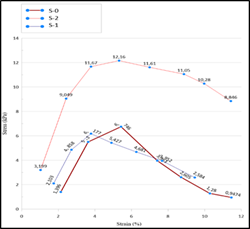
Ottawa sand is a type of sand widely used in geotechnical research for its uniformity and high silica content. However, Ottawa sand is classified as a non-cohesive soil, lacking intergranular bonds, resulting in low shear strength. Therefore, a soil improvement method that enhances the material's mechanical stability is needed. This study aims to analyze the effect of Ottawa sand pretreatment on increasing soil shear strength through a bio-stabilization method using the fungus Rhizopus oligosporus. The research method used is a laboratory experimental method with an unconfined compression test. Ottawa sand samples were divided into three treatments: normal treatment (S-0), washed sand treatment (S-1), and washed and oven-dried treatment (S-2). Each sample was mixed with tempeh yeast containing Rhizopus oligosporus and distilled water, each at 5% of the sand weight. The curing process was conducted in a closed container, with temperature, humidity, and mycelium development monitored during incubation. The results showed that sand pretreatment increased the soil's unconfined compressive strength. The samples treated with washing and oven drying (S-2) had the highest unconfined compressive strength of 9.72 kPa and shear strength of 4.86 kPa at 12 days of curing. Meanwhile, the samples without pretreatment showed lower unconfined compressive strengths. Visually observed mycelial growth showed a more even distribution in the samples with sand pretreatment. The results of this study indicate that bio-stabilization using Rhizopus oligosporus has the potential to be a more environmentally friendly soil-improvement method for increasing the stability of sandy soil.
Downloads
References
Bayat, M., Khosravian Homami, A., Mousivand, M., 2021. Shear Strength and Wind Erosion Potential of Biologically Improved Sand. Geomicrobiol. J.
De Jong, J.T., Martinez, B.C., Mortensen, B.M., Nelson, D.C., Waller, J.T., Weil, M.H., Ginn, T.R., Weathers, T., Barkouki, T., Fujita, Y., Redden, G., Hunt, C., Major, D., Tanyu, B., 2009. Upscaling of bio-mediated soil improvement, in: Proceedings of the 17th International Conference on Soil Mechanics and Geotechnical Engineering: The Academia and Practice of Geotechnical Engineering.
Djuwansah, M., 2013. Status Natrium pada Tanah Tercemar Limbah lndustri Tekstil di Rancaekek, Kabupaten Bandung Sodium Status on Polluted Soils by Textile Industrial Waste in Rancaekek, Kabupaten Bandung. J. Tanah dan Iklim.
Gou, L., Li, S., 2024. Dynamic shear modulus and damping of lightweight sand-mycelium soil. Acta Geotech.
Gou, L., Zhang, X., Gao, H., Wang, G., Yan, L., Zhu, H., 2025. Fungus-induced sand stabilization: Strength and erosion resistance properties. Eng. Geol.
Guzzetti, F., Cardinali, M., Reichenbach, P., Cipolla, F., Sebastiani, C., Galli, M., Salvati, P., 2004. Landslides triggered by the 23 November 2000 rainfall event in the Imperia Province, Western Liguria, Italy. Eng. Geol. 73, 229–245.
Jacob, G., Davina, A., Ontario, T., 2024. Restoring The Permeability Of Peat Soil Using Sand-Mixed And Bio-Grouting Techniques Made From Bacteria. J. Geosci. Eng. Environ. Technol. 9, 108–112.
Jennessen, J., Schnürer, J., Olsson, J., Samson, R.A., Dijksterhuis, J., 2008. Morphological characteristics of sporangiospores of the tempe fungus Rhizopus oligosporus differentiate it from other taxa of the R. microsporus group. Mycol. Res.
Jiang, N.-J., Soga, K., Kuo, M., 2017. Microbially Induced Carbonate Precipitation for Seepage-Induced Internal Erosion Control in Sand–Clay Mixtures. J. Geotech. Geoenvironmental Eng.
Karolinoerita, V., Annisa, W., 2020. Salinisasi Lahan dan Permasalahannya di Indonesia. J. Sumberd. Lahan.
Lazo, C.J., Lee, N., Tripathi, P., Joykutty, L., Jayachandran, K., Lee, S.J., 2024. A fungus-based soil improvement using Rhizopus oryzae inoculum. Int. J. Geo-Engineering 15, 1–14.
Lee, M., Gomez, M.G., 2024. Liquefaction triggering and post-triggering behavior of biocemented loose sand. Can. Geotech. J. 61, 1331–1352.
Lim, A., Atmaja, P.C., Rustiani, S., 2020. Bio-mediated soil improvement of loose sand with fungus. J. Rock Mech. Geotech. Eng.
Lim, A., Henzi, P., Arvin, O., 2023. COMPARISON OF PLEUROTUS OSTREATUS AND RHIZOPUS OLIGOSPORUS FUNGI FOR LOOSE SAND IMPROVEMENT. J. Geoengin.
Lim, A., Pianica, L., 2022. Efek Gradasi Tanah Pasir Pada Penggunaan Jamur Rhizopus Oligosporus untuk Perbaikan Tanah Pasir Lepas. J. Apl. Tek. Sipil.
Lim, A., Sunaryo, J.Y., Wijaya, M., Satyanaga, A., Kristijarti, A.P., 2024. Hydraulic characteristics and incubation methods for enhancing durability of Fungi- Mycelium treated silica sand using Rhizopus oligosporus and Rhizopus oryzae combination. Biogeotechnics.
Mardhiah, U., Caruso, T., Gurnell, A., Rillig, M.C., 2016. Arbuscular mycorrhizal fungal hyphae reduce soil erosion by surface water flow in a greenhouse experiment. Appl. Soil Ecol.
Park, J.S., Lin, H., Moe, W.M., 2026. Role of Trichoderma Virens mycelium in enhancing erosion resistance of low plasticity silt. Biogeotechnics.
Park, J.S., Lin, H., Moe, W.M., Salifu, E., 2023. Hydraulic Properties of Sands Treated with Fungal Mycelium of Trichoderma virens . J. Geotech. Geoenvironmental Eng.
Patil, M., Dalal, P.H., Salifu, E., Iyer, K.K.R., Dave, T.N., 2023. Biostabilization of soils as sustainable pathway for anti-desertification: Present and future perspectives. Mater. Today Proc.
Poudyal, L., Adhikari, K., 2021. Environmental sustainability in cement industry: An integrated approach for green and economical cement production. Resour. Environ. Sustain.
Salifu, E., Di Rauso Simeone, G., Russo, G., Rao, M.A., Urciuoli, G., El Mountassir, G., 2025. Influence of environmental conditions on the growth of Pleurotus ostreatus in sand. Biogeotechnics.
Salifu, E., El Mountassir, G., 2021. Fungal-induced water repellency in sand. Geotechnique.
Salifu, E., El Mountassir, G., Minto, J.M., Tarantino, A., 2022. Hydraulic behaviour of fungal treated sand. Geomech. Energy Environ.
Šelo, G., Planinić, M., Tišma, M., Martinović, J., Perković, G., Bucić-Kojić, A., 2023. Bioconversion of Grape Pomace with Rhizopus oryzae under Solid-State Conditions: Changes in the Chemical Composition and Profile of Phenolic Compounds. Microorganisms 11.
Sparringa, R.A., Kendall, M., Westby, A., Owens, J.D., 2002. Effects of temperature, pH, water activity and CO2 concentration on growth of Rhizopus oligosporus NRRL 2710. J. Appl. Microbiol. 92, 329–337.
Sun, Z., Chen, Y. gui, Cui, Y. jun, Xu, H. dong, Ye, W. min, Wu, D.B., 2018. Effect of synthetic water and cement solutions on the swelling pressure of compacted Gaomiaozi(GMZ) bentonite: The Beishan site case, Gansu, China. Eng. Geol.
Sunaryo, J.Y., Lim, A., Renggaman, A., Wijaya, M., 2023. PENGARUH NUTRISI TERIGU TERHADAP PERBAIKAN TANAH PASIR SILIKA DENGAN MISELIUM JAMUR. J. Arsip Rekayasa Sipil dan Perenc. 6, 256–266.
Wahyudi, A., 2018. Pengaruh Variasi Suhu Ruang Inkubasi Terhadap Waktu Pertumbuhan Rhizopus Oligosporus Pada Pembuatan Tempe Kedelai. J. Redoks 3.
Yang, L., Park, D., Qin, Z., 2021. Material Function of Mycelium-Based Bio-Composite: A Review. Front. Mater.
Zhang, X., Fan, X., Han, C., Wang, C., Yu, X. (Bill), 2020. Improving Soil Surface Erosion Resistance by Fungal Mycelium.
Zhang, X., Fan, X., Wang, C., Yu, X., 2023. A novel method to improve the soil erosion resistance with fungi. Acta Geotech.
Downloads
Published
Issue
Section
License
Copyright (c) 2026 Journal of Geoscience, Engineering, Environment, and Technology

This work is licensed under a Creative Commons Attribution-ShareAlike 4.0 International License.
Copyright @2019. This is an open-access article distributed under the terms of the Creative Commons Attribution-ShareAlike 4.0 International License which permits unrestricted use, distribution, and reproduction in any medium. Copyrights of all materials published in JGEET are freely available without charge to users or / institution. Users are allowed to read, download, copy, distribute, search, or link to full-text articles in this journal without asking by giving appropriate credit, provide a link to the license, and indicate if changes were made. All of the remix, transform, or build upon the material must distribute the contributions under the same license as the original.


