The Laboratory Investigation of the Effect of Calcium Chloride (CaCl₂) Derived from Duck Eggshells on the Thickening Time and Strength of Drilling Cement
DOI:
https://doi.org/10.25299/jgeet.2025.10.1.1.24246Keywords:
Compressive Strength, Shear Bond Strength, Calcium Chloride, Thickening Time, Drilling CementAbstract
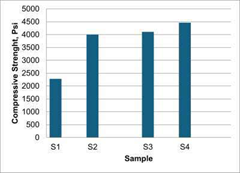
The thickening time and mechanical strength are vital in the performance of the drilling cement and are usually tested by API standards. The paper determines the role of duck eggshells' calcium chloride (CaCl2) as a natural accelerator on the cement slurry properties. CaCl2 was prepared by a regulating reaction between eggshell powder and 1M HCl and then was mixed with the Class G cement at the 1%, 2%, 3%, and 4% weight proportions. The experimental findings show that the most preferred performance is observed when the CaCl2 is 4 percent, which reduces thickening time to 128 minutes and increases compressive strength to 4,464.62 psi and shear bond strength to 370.28 psi. These results imply that using waste materials as the source of CaCl2 bio-based accelerators would be a viable source that would be environmentally viable in the optimization of drilling cements
Downloads
References
Ahmed, S., Ezeakacha, C.P. and Salehi, S., 2018. Improvement in cement sealing properties and integrity using conductive carbon nanomaterials: From strength to thickening time. Proceedings of the SPE Annual Technical Conference and Exhibition, SPE-191709-MS. doi:10.2118/191709-MS
American Petroleum Institute (API), 2011. Specification for cements and materials for well cementing industries. Washington, DC: American Petroleum Institute.
Bourgoyne, A.T., Millheim, K.K., Chenevert, M.E. and Young, F.S., 1986. Applied drilling engineering. Richardson, TX: Society of Petroleum Engineers. doi:10.2118/9781555630010
Cao, M., Ming, X., He, K., Li, L. and Shen, S., 2019. Effect of macro-, micro- and nano-calcium carbonate on properties of cementitious composites: A review. Materials, 12(5), 781. doi:10.3390/ma12050781
Choolaei, M., Rashidi, A.M., Ardjmand, M., Yadegari, A. and Soltanian, H., 2012. The effect of nanosilica on the physical properties of oil well cement. Materials Science and Engineering A, 538, pp.288–294. doi:10.1016/j.msea.2012.01.045
Dorn, T., Hirsch, T. and Stephan, D., 2023. Working mechanism of calcium nitrate as an accelerator for Portland cement hydration. Journal of the American Ceramic Society, 106(1), pp.752–766. doi:10.1111/jace.18782
Ershadi, V., Ebadi, T., Rabani, A., Ershadi, L. and Soltanian, H., 2011. The effect of nanosilica on cement matrix permeability in oil wells to decrease environmental pollution. International Journal of Environmental Science and Development, 2(2), pp.128–132. doi:10.7763/IJESD.2011.V2.109
Mursyidah, Novrianti, Novriansyah, A. and Utama, T.P., 2017. A study of cement additives from varied heating temperatures of coconut shell charcoal to increase cement strength. MATEC Web of Conferences, 101, 03005. doi:10.1051/matecconf/201710103005
Novrianti, N. and Umar, M., 2017. Studi laboratorium pengaruh variasi temperatur pemanasan arang batok kelapa terhadap thickening time dan free water semen pemboran. Journal of Earth Energy Engineering, 6(1), pp.38–43. doi:10.22549/jeee.v6i1.632
Radonjic, M. and Oyibo, A.E., 2014. Comparative experimental evaluation of drilling fluid contamination on shear bond strength at wellbore cement interfaces. World Journal of Engineering, 11(6), pp.597–604. doi:10.1260/1708-5284.11.6.597
Roshan, H. and Asef, M.R., 2010. Characteristics of oilwell cement slurry using CMC. SPE Drilling & Completion, 25(3), pp.328–335. doi:10.2118/114246-PA
Rubiandini, R., Siregar, S., Suhascaryo, N. and Efrial, D., 2005. The effect of CaO and MgO as expanding additives to improve cement isolation strength under HPHT exposure. ITB Journal of Engineering Science, 37(1), pp.29–47. doi:10.5614/itbj.eng.sci.2005.37.1.3
Rubiandini, R.S., 2000. New additive for improving shear bond strength in high-temperature and high-pressure cement. Proceedings of the IADC/SPE Asia Pacific Drilling Technology Conference, SPE-62750-MS. doi:10.2118/62750-MS
Salehi, S., Khattak, M.J., Bwala, A.H. and Karbalaei, F.S., 2017. Characterization, morphology and shear bond strength analysis of geopolymers: Implications for oil and gas well cementing applications. Journal of Natural Gas Science and Engineering, 38, pp.323–332. doi:10.1016/j.jngse.2016.12.042
Zulkifly, R., et al., 2019. Clamshells energy melalui metode elektrolis dalam memenuhi. Celebes Environmental Science, 1(April), pp.21–26.
Downloads
Published
Issue
Section
License
Copyright (c) 2026 Journal of Geoscience, Engineering, Environment, and Technology

This work is licensed under a Creative Commons Attribution-ShareAlike 4.0 International License.
Copyright @2019. This is an open-access article distributed under the terms of the Creative Commons Attribution-ShareAlike 4.0 International License which permits unrestricted use, distribution, and reproduction in any medium. Copyrights of all materials published in JGEET are freely available without charge to users or / institution. Users are allowed to read, download, copy, distribute, search, or link to full-text articles in this journal without asking by giving appropriate credit, provide a link to the license, and indicate if changes were made. All of the remix, transform, or build upon the material must distribute the contributions under the same license as the original.